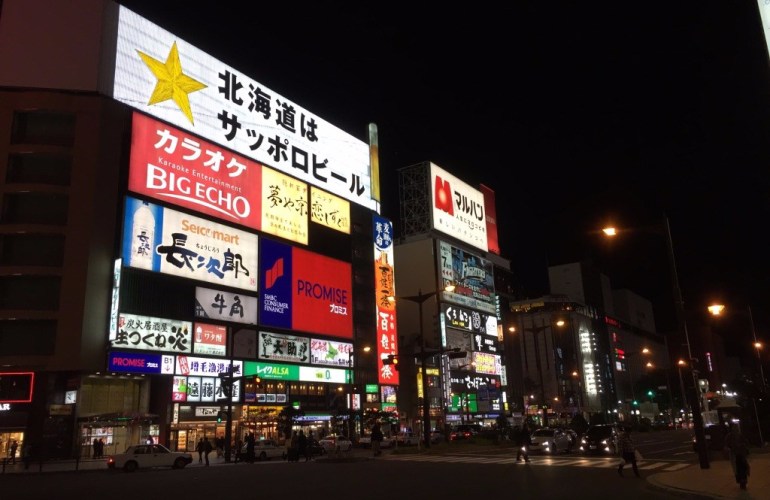
(Sapporo Trip – Part 1) Susukino – Shopping, Eating, Drinking


This slideshow requires JavaScript.

Brandon went on a trip to Seoul and Sapporo, so here are some pictures and info from his adventure!

This post will focus on the Susukino Area. Susukino is considered to be one of the major entertainment districts in Japan.

The Susukino Area can be accessed by taking the Namboku Line (heading towards Makomanai) from Sapporo Station and getting off at Susukino Station, which is two stops from Sapporo Station.

Shopping:

When visiting Sapporo, Susukino is an area you must visit. For those who enjoy window shopping, there’s a shopping arcade/street (shōtengai, 商店街) called Tanukikoji Shopping Arcade/Street. Tanukikoji is located just north of Susukino Station. In modern Japanese society where numerous shōtengai are steadily becoming empty “ghost-streets”, a stroll through Tanukikoji is experiencing a fusion of traditional and modern Japanese culture.

Eating:

For ramen lovers, Sapporo is heaven. Many visitors check out the Ramen Yokochō (Ramen Alley) in Susukino for their first bowl of ramen, but if you are more adventurous, skip Ramen Yokochō and explore less-traveled side-streets to find your bowl of steaming perfection.

Other than ramen, there are many types of food to make your waistline bulge: jingisukan (“Genghis Khan”: grilled mutton), seafood, and more.

For more photos of food, check out this post we wrote about Sapporo and Otaru.

Drinking:

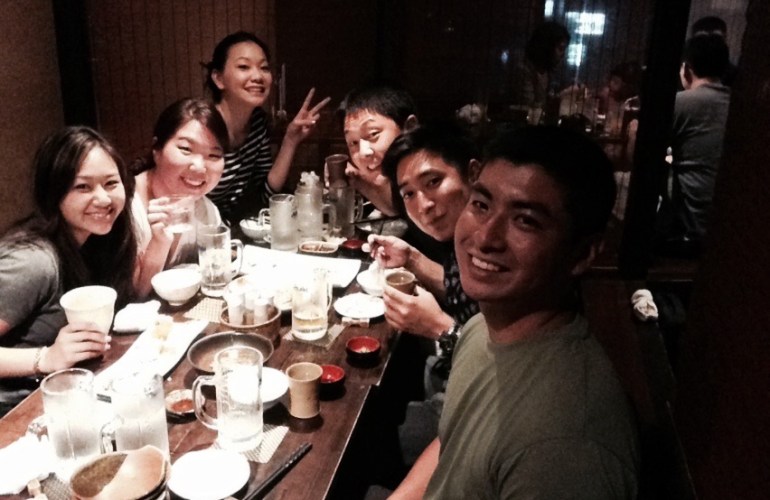
For those who love their alcohol, Susukino has a lot of places to satisfy your thirst while eating delicious food. Just be careful of drinking too much at a nomihōdai (all-you-can-drink)!

When eating/drinking while traveling Japan, if you want to try many types of food and restaurants, we recommend not eating or drinking too much at one place. However, if you are paying a good amount of money at a certain establishment, get your money’s worth!

Keep an eye out for future posts about more food (of course) and other places to check out while visiting Sapporo!

Part 2  – Japanese Fast Food
Part 3 – Jingisukan (Grilled mutton)
Part 4 – Mt. Moiwa
Part 5 – COSTCO
What to Do When You’re in Japan During a Typhoon

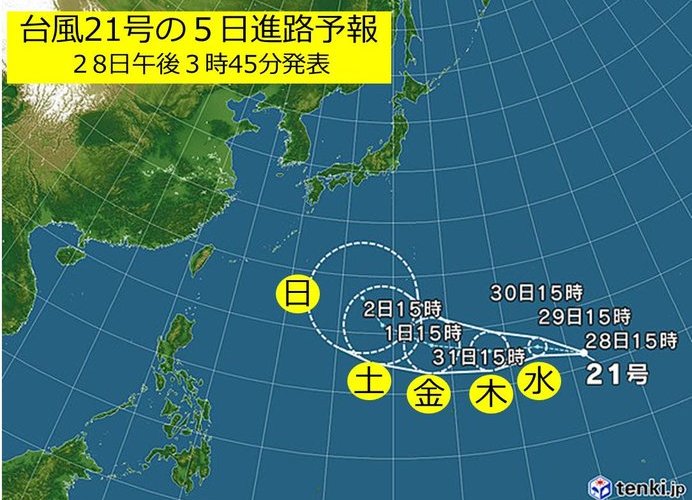
(Featured Image from tenki.jp) Info about Typhoon Jebi’s expected path.

Hurricane Lane has passed through Hawaii, and we got about 50 inches of rain here on the east side of the Big Island. To prepare for a hurricane in Hawaii, people will fill up their car(s) with gas, buy a lot of water, food, ice, batteries, etc., and tape and/or board up their windows.

What if you’re visiting Japan when a typhoon is going to hit where you are?

  1. Typhoon Season
    • Typhoon season typically starts in (late) June and end in November, but there is a significant increase in typhoons during August and September.
  2. General Information about Typhoons
    • In Japan, typhoons aren’t given names, they are numbered, but information in English will include a typhoon’s name.
    • Intensity (from least to greatest): tropical depression, tropical storm, severe tropical storm, typhoon (strong, very strong, violent)
  3. Weather Updates Sources
  4. Water, Food, and Other Necessities
    • A typhoon usually passes through an area within 12 hours, but it’s always good to buy water and food that won’t spoil.
    • If you need medication, toiletries, or other items, you should buy these beforehand.
  5. Utilities
    • Depending on where you are and how severe the weather is, utilities might go out. So, stay updated about the strength and path of a storm.
  6. Transportation
    • When the weather gets bad or is expected to get bad, flights will be canceled, and train service will be halted.
  7. Wind, Rain, Flooding, and High Seas
    • Stay indoors because of high winds and a lot of rain. Also, stay away from rivers, streams, canals because of flash floods/flooding, and also stay away from the coastline because of surges, which can be about 30 feet tall.
  8. Temperature
    • During summer, temperatures get a little cooler, but the day after a typhoon passes gets really hot.

If you are in Japan when a typhoon hits, please be careful and stay safe!

Basic Manners/Etiquette in Japan

No Tips

Japan doesn’t have a tipping culture because high-quality customer service is an expectation. If you want to show your gratitude for receive great service, you can give a little gift. For example, because we’re from Hilo, my parents gave a small box of Big Island Candies to taxi drivers, waiters/waitresses, hotel staff, etc.

In Restaurants

Certain izakayas (Japanese-style taverns) require you to take off your shoes before going inside. It’s easy to recognize this because there will be lockers to put you shoes in at the entrance, and there is a step to go inside of the main area of the restaurant.

Also, it is absolutely okay to call on waiters/waitresses when you want to order, if you want to ask questions, and when you want to get the bill. About paying your bill, if you see a register near the entrance when you walk in, you should pay at the register. Other places might have a little sign on the table that says, “Please pay at table.”

When you’re drinking with your friends and having a good time, somebody might spill drinks on the table. If this happens, you should clean up after yourself, so ask the waiter/waitress to bring you towels. They will help you clean up a little bit and also give you new plates, utensils, and other things if needed.

On Escalators

People in Japan will stand on one side of the escalator to let others who are in a hurry to walk on the other side. Depending on where you are in Japan, the side you stand on is different. In Tokyo, people stand on the left; in Osaka, people stand on the right. Some people generalize this rule by saying if you are in East Japan, stand on the left, and if you are in West Japan, stand on the right. But from our experience, it’s best to quickly observe which side people are standing on and follow, especially in areas in Central Japan, such as Nagoya.

On Trains

  • Put your phone on vibrate.
  • Don’t talk on your phone.
  • Turn your phone off in near priority seat section.
  • Don’t talk in a loud voice.
  • Stand in line to ride the train.
  • If you drink on the train, don’t get completely wasted and take your trash with you.
  • If you’re standing near the door when the train is packed, briefly step outside to let people off and then get back on.
  • Don’t hang and swing on the handles/bars on the train.
  • If you’re not used to riding trains while standing, hold on the handle or bar so you don’t bump (more like crash) into other passengers.

Public Restrooms

The majority of public restrooms do not have paper towels to wipe your hands. Some restrooms have a hand dryer, but you should bring a handkerchief or little towel with you all the time.

Trash

It’s a good idea to always carry a plastic bag, like ones you get from convenience store, to use as a trash bag.

Standing in Line

Just like we learned in elementary school, if there’s a line, don’t cut.


If you have any questions about manners/etiquette, feel free to contact us!!!

Travel Efficiently by Knowing How to Pack and Use Luggage Transport Services!

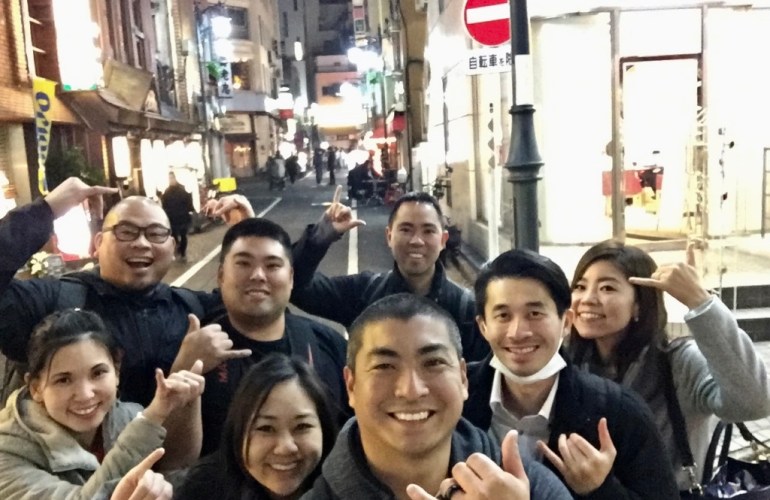
(Feature Image of us after we drank at Shinjuku)

What should you pack?

The most important things to have with you is your PASSPORT, wallet, phone, a black or blue PEN, digital/hard copy of your passport. The first 3 are common sense, but some people might be thinking why a pen is necessary. You need to fill out your customs form before arriving, so bring a pen. You need to have a digital copy (a picture on your phone) AND a hard copy (copy on paper) of your passport just in case you lose your passport or your passport is stolen.

The next thing to think about is clothes. If you’re traveling during winter months, we suggest bringing one or two long-sleeved shirts, a couple pairs of jeans/long pants, warm jacket. After you arrive, you can head over to UNIQLO and buy HEATTECH, which is an inner-layer to keep you warm. So, traveling during winter means you need to pack more clothes. If you travel during summer, Japan is hot and humid, so you can pack t-shirts, shorts. Traveling during spring and fall can be tricky because temperatures will go up and down, so check we recommend checking weather reports before you leave.

You can take your laptop, noise canceling headphones, camera, etc.

What not to pack?

Beef products, opioids, (obviously) drugs, firearms, weapons, not more than $10,000 in cash, etc. For a list, check out this link.

Are you traveling to multiple areas of Japan and don’t want to drag around your heavy luggage on the trains and/or shinkansen? We have the solution for you!

Yamato Transport created for “scenes” to help travelers enjoy their trip even more:

Scene 1: Send your luggage to the hotel from the airport

Most flights from Hawaii will arrive in Japan at night, so you can’t send your big luggage after arriving and get it the same day. If you pack a set of clothes and other essentials in your carry-on or a smaller suitcase you check in and if you don’t mind getting your luggage the next day, you can send your big luggage. Please check the airport you are landing in to see if a counter is available and their business hours.

Scene 2: Luggage Delivery Between Hotels

This is a service that Brandon uses frequently because he and his travel buddies visit different areas of Japan in the same trip. If you send your luggage to your next hotel, the hotel staff will might put your luggage in your room before you even arrive! Now that’s service!

Scene 3: Luggage Storage and Tourist Information Services

This service is useful for travelers from Hawaii because flights from Japan depart at night and arrive in Hawaii in the morning. If you want to do some sightseeing before your flight, you can leave your luggage at a service counter, go sightseeing, shopping, eating or drinking, pick up or luggage, and then catch a limousine bus or train to the airport.

Scene 4: Travel to ski resorts and golf courses hands free

For skiers, snowboarders, and golfers, you can take your gear to a service counter and they will send it to your destination.

Recommended Areas to Stay in Tokyo

Happy Aloha Friday!

First-time travelers to Tokyo, maybe even those who have traveled to Tokyo a couple times, might not be sure which area they should set as their base camp. Depending on the type of experience you’re searching for, your travel itinerary, and, of course, your wallet.

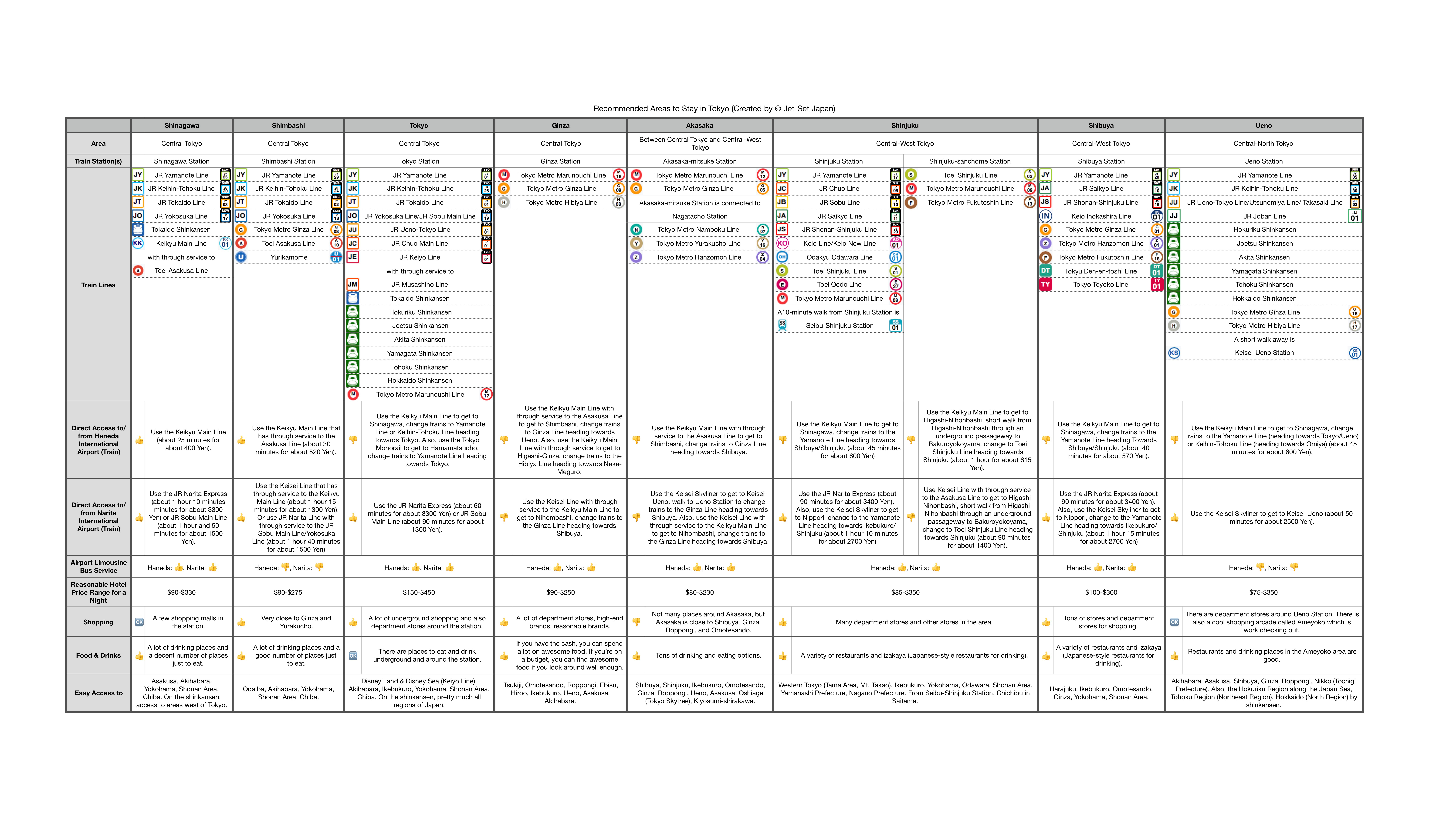
Here is a list, in no particular order, of train stations that we recommend to stay near when you visit Tokyo. The list is an image, and there is a lot of info. So, click on the image for high-resolution or you can download the image.

recommended-areas-to-stay-in-tokyo.jpg

In a nut shell, we recommend the following areas: Shinagawa, Shimbashi, Tokyo (Station), Ginza, Akasaka, Shinjuku, Shibuya, and Ueno. Each area has its own characteristics which appeal to different people. For example, Shinagawa, Shimbashi, and Tokyo are extremely convenient areas because of their access to different train lines, and all three have an image of being major hubs for business people. If you compare the three, Shimbashi has the strongest image of drinking; Tokyo has the most elegance; Shinagawa might actually be low-key compared to the other two.

Akasaka is not a major hub for business people, but there are a lot of companies, government institutions, etc. in the area, so streets in evening will be full with people looking for a place to drink.

Ginza, like Roppongi, Aoyama, Omotesando, is considered to be a high-class area. But even in these areas, there’s always reasonable and quality places to shop and dine.

Shinjuku and Shibuya are geographically next to each other in Tokyo, but Shibuya has an image suited more towards the younger generation (not saying that Shinjuku is for older people). Both areas have a lot of shopping, eating, drinking options, but a lot of visitors to Tokyo are attracted to Shibuya’s “scramble crossing”.

Ueno is located in Tokyo’s shitamachi (old downtown) area, so the atmosphere is different to other areas of Tokyo mentioned above. Ueno is close to Asakusa, and Asakusa has a nice “nostalgic” feel with its shopping arcades.

For more detailed information, check out the list above!