Getting a U.S. Passport and Japanese Yen

Getting a U.S. Passport

1. Application Form
If:

  • you are applying for the first time
  • you under 16 years old
  • your previous passport was issued when your under 16 years old
  • your passport was stolen, damaged, or lost
  • your passport was issued more than 15 years ago

you need to apply in person using a DS-11 form.

2. Copy of Supporting Documents

  • Citizenship evidence
    • U.S. birth certificate
    • Certificate of Naturalization
    • Certificate of Citizenship
    • Certificate of Birth (If born outside of the U.S.)
  • Identification
    • Valid U.S. passport (can be expired)
    • Valid U.S. driver’s license
    • Certificate of Naturalization or Citizenship
    • Government employee ID
    • U.S. military ID
    • Valid foreign passport
    • If you use an out-of-state ID, another ID must be shown.
  • Proof of relationship for children under 16 years old

Photocopies should:

  1. Be readable
  2. On white 8.5″ x 11″ standard paper
  3. Black and white
  4. Single-sided for all documents including identification. If you have information on two sides of a document, copy the front and back on separate sheets of paper.

3. Passport Photo

  • 2″ x 2″ color passport photo.

4. Fees

*VERY IMPORTANT: When applying for a passport, you have the option of applying for a passport book, passport card, or passport book and passport card. To travel to Japan you ABSOLUTELY need a PASSPORT BOOK. Passport cards are only valid for travel within the United States, to Canada, to Mexico, to Bermuda, and to the Caribbean.

*Also, DO NOT book your tickets to Japan before you receive your passport!

Japanese Yen

Japanese Yen

General rule for calculating how much Japanese Yen (represented by the “¥”), move the decimal twice to the left, and that’s approximately how much it is worth in dollars. If you want an exact amount, check the currency exchange rate.

Looking and the currency,
Bills:
¥10,000 is about $100 (bottom of left fan)
¥5000 is about $50 (bottom of right fan)
¥2000 is about $20 (these bills not really in circulation in Japan, but you might get some when exchanging money) (top of right fan)
¥1000 is about $10 (top of left fan)

Coins:
¥500 is about $5 (biggest coin that is gold-colored)
¥100 is about $1 (silver-colored coin without a hole)
¥50 is about $0.50 (silver-colored coin with a hole)
¥10 is about $0.10 (bronze-colored coin)
¥5 is about $0.05 (gold-colored coin with hole)
¥1 is about $0.01 (smallest and lightest coin)

It is recommended that you exchange dollars to yen before you depart for Japan.

More explanations about booking flights/accommodations and transportation in Japan are coming up in the near future!
Introduction to Traditional Japan

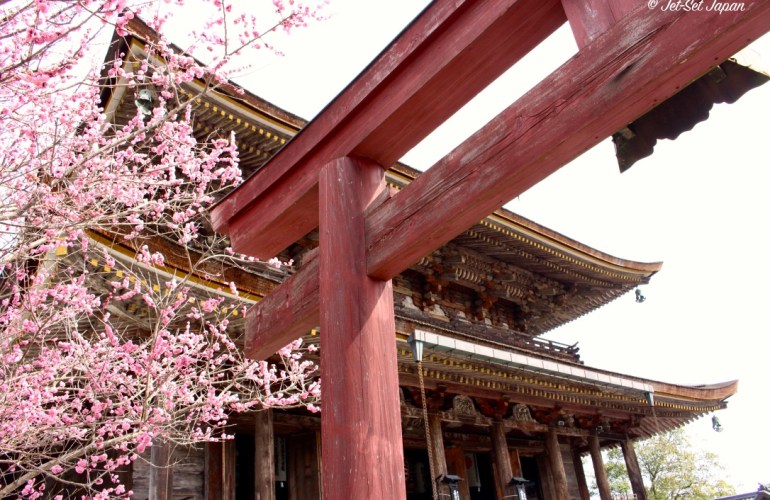
Featured picture is of Kinpusenji Temple in late March with ume (plum) blossoms.

In this post, we will introduce 3 things about traditional Japanese Culture: castles, temples, shrines.

Castles

This slideshow requires JavaScript.

Throughout Japan’s history, there was a long period where the country was feudalistic. Daimyo (feudal lords) ruled not only their land and people, but they also controlled their own armies. These powerful feudal lords built castles to protect their territory. In the pictures above, there are pictures of the castle keep and various areas of the main castle grounds, but in history, the castle referred to the surrounding area (castle town). When visiting a castle, the interior is usually a small museum where you can find historical facts about its history. If you want to see nice views of the surrounding city, you can go all the way to the top of the castle keep. Just be careful of strong winds!

Temples

This slideshow requires JavaScript.

A lot of people confuse temples and shrines, but here is the easiest way to differentiate the two: shrines have torii gates (check pictures below); temples don’t have torii gates. However, there might be a shrine on the temple grounds. In one of the pictures above, you can see a small, orange torii gate on the left of the main hall of Kinpusenji Temple. The other picture is of Zojoji Temple, which is near Tokyo Tower.

Shrines

This slideshow requires JavaScript.

Now that we know structural difference between a shrine and a temple, let’s take a look at the religious difference. Temples = Buddhism; Shrines = ShintoShinto has many gods/deities, and different gods/deities are enshrined at different shrines. The most divine shrine in all of Japan is Ise Grand Shrine. Amaterasu, the God of the Sun, is enshrined there. Another extremely important shrine is Izumo Shrine. This shrine was dedicated to Ookuninonushi (Grand Master of the Land), who is the god of building the land, amongst other things. In this aspect, Shinto is similar to Hawaiian mythology because Hawaiian mythology has many gods who have different powers, authority, and personalities: Amaterasu is like Pele.

When visiting castles, temples, and shrines, visitors should always mind their manners, but it is hard to do so if you don’t know what to do. We’ll write blog posts in the future about manners at certain places.

We’ll also write posts about other topics!

Mahalo for visiting today!

Japanese Grindz! What You Should Eat for Your First Trip to Japan

This is Chad! Here is a short post about three things, out of the many great food, you should eat if it’s your first trip to Japan.

Ramen

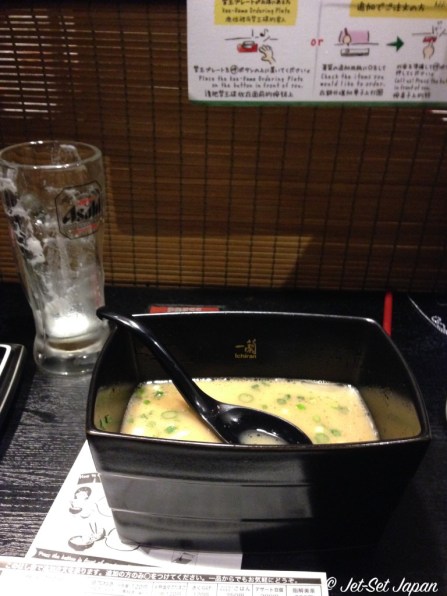
Empty beer and Ramen
otm7jRMSQn68pg74kbWmug_thumb_3068
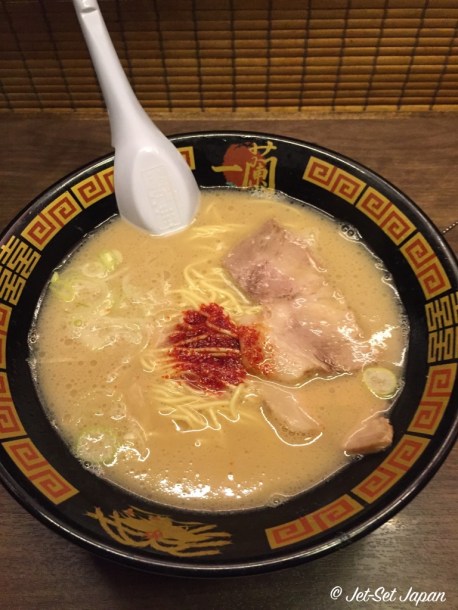
Hot Ramen!

Most people have eaten saimin or Cup Noodle here in Hawaii, but how many people have tried authentic Japanese ramen? We grew up on eating saimin and Cup Noodle, even now! With our love of noodles, coincidentally, our first meal in Japan was ramen. Chad’s first ramen was shoyu ramen with gyoza and fried rice (sorry no picture! we didn’t have smartphones back then…), and Brandon’s first ramen was Ichiran (一蘭, いちらん). Ichiran is from Fukuoka and they specialize in tonkotsu ramen, which is a pork-based broth (to explain really briefly). Brandon’s first bowl of tonkotsu ramen (picture on the top) is in a special square-shaped bowl. The picture on the bottom, also from Brandon, is also Ichiran ramen, but it was in Tokyo. Ramen is always good for your first meal in Japan or after a night out on the town!

Sushi

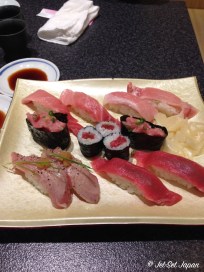
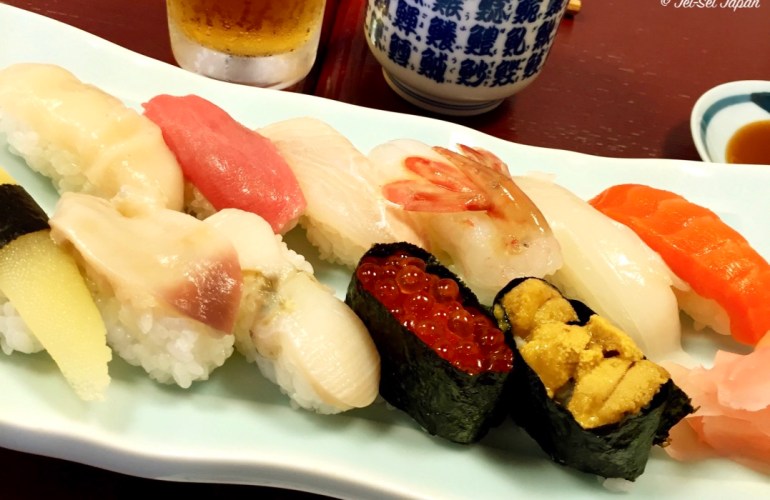
Of course your are going to eat sushi in Japan!!! Japan is the place to go to have fresh, quality sushi. For those who don’t like sashimi, you can have it aburi (broiled)-style, and this gives the fish a different texture and taste, so give it a try!

Also, sushi is a lot more than just your regular maguro (ahi) nigiri sushi. Salmon, scallops, ikatakoikurauni (yes, it’s good when it’s fresh!), unagianago, and many, many other types to enjoy!

Yakiniku

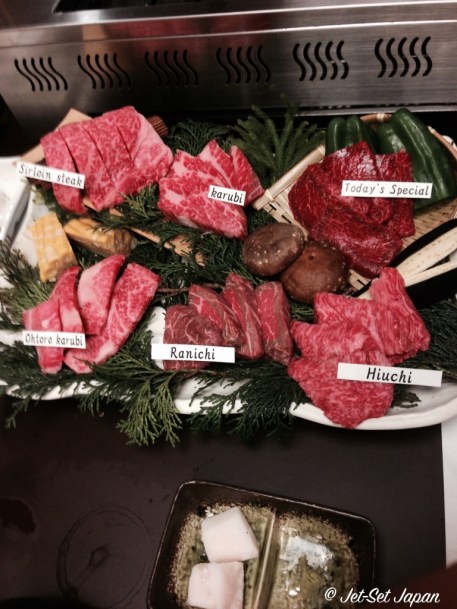
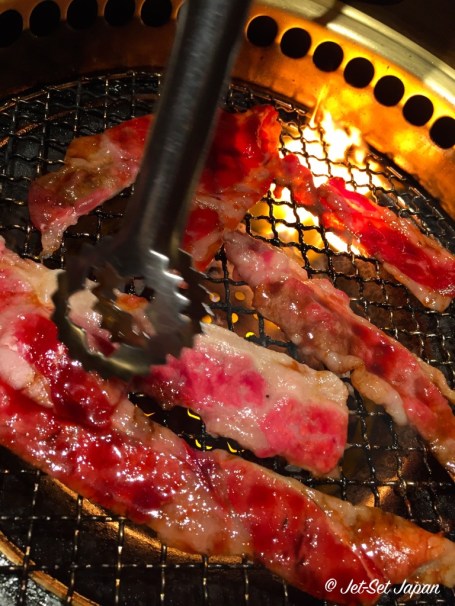
Hibachi is a favorite pastime of Hawaii, and Japan is no different because this hibachi culture came from Japan! Japan takes it step further with high quality meat and all-you-can-drink options. The better the quality of meat, the higher the price will be, but if you know where to look for, you can find reasonable prices for broke-da-mouth meat!

In future posts, we will explain more about different experiences of devouring Japanese food!