Featured

(Sapporo Trip – Part 4) Mt. Moiwa

EHNSz2RmRYisgCIimjL9Fw_thumb_34f1

Part 4 of Brandon’s Sapporo trip is Mt. Moiwa, which is one of the best spots for viewing Sapporo’s city lights.

Mt. Moiwa is located about 45 minutes from Susukino. This is how to get there:


This slideshow requires JavaScript.

From the 4 pictures in the slideshow above:

  • DO NOT GO THIS WAY Picture: When searching on Google Maps on how to get to the Mt. Moiwa Ropeway from Susukino, it will tell you to take the Sapporo Shiden street car and get off at Denshajigyosho-mae Station. If you take this route, you will have to walk up steep stairs and then pass a temple with a cemetary, which is not very scenic.
  • The BETTER Way: Take the Sapporo Shiden street car to Ropeway Iriguchi Station. There is a free shuttle bus from the Station to the Mt. Moiwa Ropeway (5 minute ride) that departs about every 20 minutes, which is recommended if you or your somebody in your party has difficulty walking.
  • From Ropeway Iriguchi Station: It is a 5-minute walk uphill.
  • Ropeway & Minicar Tickets: First the ropeway will take you most of the way up the mountain, and then you will transfer to a minicar that will take you to the summit. It’s 1700 Yen for a roundtrip ticket for both the ropeway and minicar.

Here’s the view when you get there:


This slideshow requires JavaScript.

Some tips when going to the top of Mt. Moiwa:

  • There is an omiyage (souvenir shop), vending machines with hot and cold drinks, and a restaurant, but we recommend bringing your own snacks, o-bentos (lunch boxes), and drinks.
  • If you are visiting during cooler/colder weather, pack some warm clothes buy hokkairo (hand warmers) that can be bought in convenience stores or pharmacies.
  • The summit can get quite windy, so make sure your things don’t get blown away.
  • Be flexible with your planning because it might be cloudy on one day but sunny on another day.

Last part is:

Part 5 – COSTCO

The Three Great Gardens of Japan: Kairakuen, Korakuen, Kenrokuen

The most famous of all Japanese gardens are the Three Great Gardens of Japan (日本三名園, Nihonsanmei-en): Kairakuen (偕楽園), Korakuen (後楽園), and Kenrokuen (兼六園). In this post, we will show a couple of pictures we took at each garden and give some useful info.

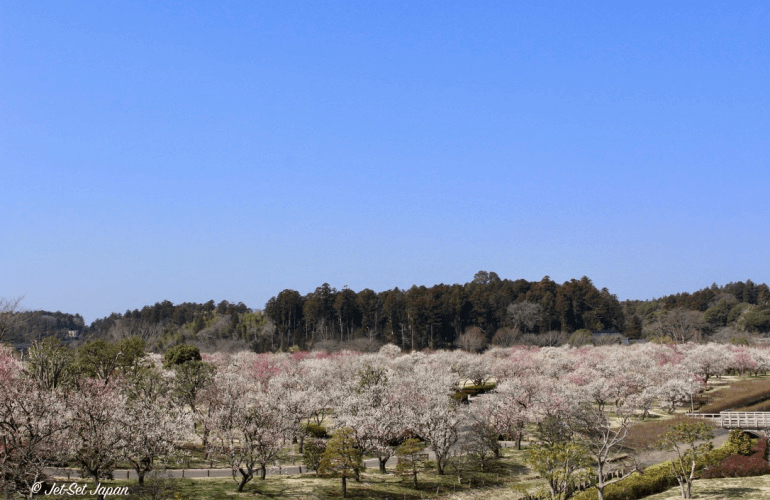
Kairakuen (偕楽園)

This slideshow requires JavaScript.

Location: Mito City, Ibaraki Prefecture (Kanto Region)
Access: From Tokyo, Mito Station (and the temporary Kairakuen Station) can be reached by taking the Joban Line, which is run by JR and stops at Shinagawa Station, Tokyo Station, and Ueno Station. Limited express trains cost more, but will get there in about an hour, which is about half the time of ordinary trains.

  • From the North Entrance/Exit of Mito Station, take a bus from bus stop 4 (bus heading for Kairakuen; get off at Kobuntei Omotemon, Kairakuen Higashimon, or Kairakuen-mae) or 6 (bus heading for Kairakuen). Bus takes about 15-20 minutes.
  • During the plum blossom festival during spring, there is a temporary station called Kairakuen Station. So Kairakuen can be accessed by foot.

Price: Free. 200 Yen to enter the Kobuntei.
Must-see
: Plum Blossom Festival (Ume Matsuri) which is usually held from mid-February to late-March. Depending on the weather, best-viewing dates differ from year to year. We will write a post about this in the future.

Recommended trip plan: A day-trip from Tokyo. Leave in the morning so you can arrive mid-morning. Enjoy the garden for a few hours, and then return to Tokyo before dinner.

Korakuen (後楽園)

This slideshow requires JavaScript.

Location: Okayama City, Okayama Prefecture (Chugoku Region)
Access: From Tokyo Station by shinkansen, about 3 and a half hours. From Shin-Osaka Station by shinkansen, about 1 hour. From Hiroshima by shinkansen, about 45 minutes. Note that these times are calculated for those using a JR Pass, which restricts users from riding the fastest trains (Nozomi, Mizuho, etc.).

  • From the East Entrance/Exit of Okayama Station, take a bus from bus stop 1. Non-stop buses from this bus stop to Korakuen are available. Bus takes about 10 minutes.
  • From Okayama Station, take the city tram heading for Higashiyama, and get off at Shiroshita. About a 12 minute walk from Shiroshita.

Price: 400 Yen for just Korakuen. Combination ticket for Korakuen and Okayama Castle is 560 Yen. Combination ticket for Korakuen Okayama Prefectural Museum is 520 Yen. Combination ticket for Korakuen, Okayama Castle, and Hayashibara Museum of Art is 960 Yen.
Must-see
: As you can see from the panorama picture above, Korakuen has large lawns surrounding its ponds. This give the garden a much more spacious atmosphere. You can also by a combination ticket for both Korakuen and Okayama Castle. There are also combination tickets for Korakuen and Okayama Prefectural Museum, and Korakuen, Okayama Castle, and Hayashibara Museum of Art.

Important: There is an area in Tokyo called Korakuen, and this area has a baseball stadium, amusement park, and a Japanese garden called Koishikawa Korakuen. This is not the Korakuen we are talking about! The Korakuen we are talking about is located in Okayama Prefecture.

Recommended trip plan: A day-trip from Hiroshima. Leave Hiroshima in the morning so you can walk around the garden and/or castle mid-morning. Have some lunch around Okayama Station before heading back to Hiroshima or moving on to another area, perhaps Osaka.

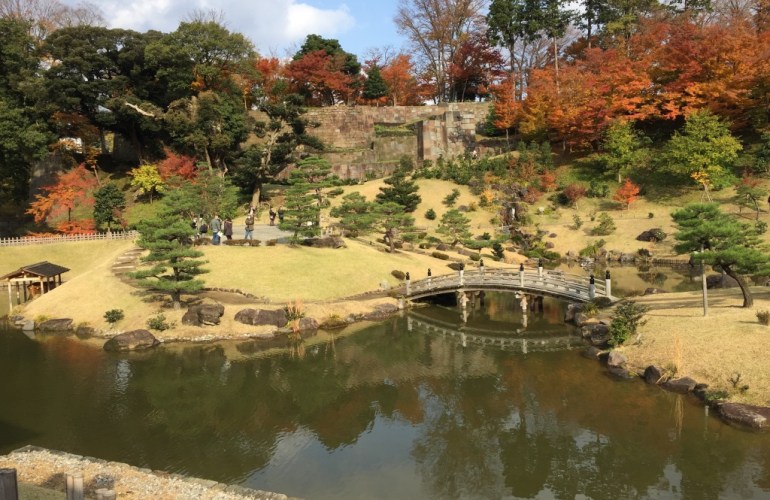
Kenrokuen (兼六園)

This slideshow requires JavaScript.

Location: Kanazawa City, Ishikawa Prefecture (Chubu Region, Hokuriku Region)
Access: From Tokyo Station by shinkansen, about 3 hours to Kanazawa Station. Note that these times are calculated for those using a JR Pass, which restricts users from riding the fastest train on the Hokuriku Shinkansen (Kagayaki).

  • From the East Entrance/Exit of Kanazawa Station, take a Hokutetsu bus from bus stop 6 (Kenrokuen Shuttle) or 7 (Kanazawa Loop Bus) and get off at Kenrokuen-shita/Kanazawa Castle. Hokutestsu has a 1 day bus pass for 500 Yen.
  • JR also has buses running from the East Entrance/Exit of Kanazawa Station, so you can use your JR pass, but the Hokutetsu is more convenient because they have buses running more frequently.

Price: 310 Yen
Must-see
: If you go to Kanazawa before or after the large amount of snowfall, you can still see yukizuri that protect the trees from snow. Kanazawa Castle is also next to Kenrokuen. The Higashichaya District and the Oumicho Fish Market in the vicinity. You can walk to Higashichaya District from Kenrokuen, but it takes about 20 minutes on foot. There are taxi stands around the garden, so if you share a taxi with your friends, it’ll save a lot of time. We will write a post just about Kanazawa in the near future.

Recommended trip plan: A little far for just a day-trip, but it is possible if you leave early in the morning. However, we think you should stay at least one night Kanazawa because they have A LOT of great food.

This is our brief introduction of Japan’s three fantastic gardens. For all gardens, try to visit during Spring, Summer, or Fall, but don’t visit too early in Spring because you might miss all of the beautiful greenery, even though there are many nice structures and landscaping to look at during winter.
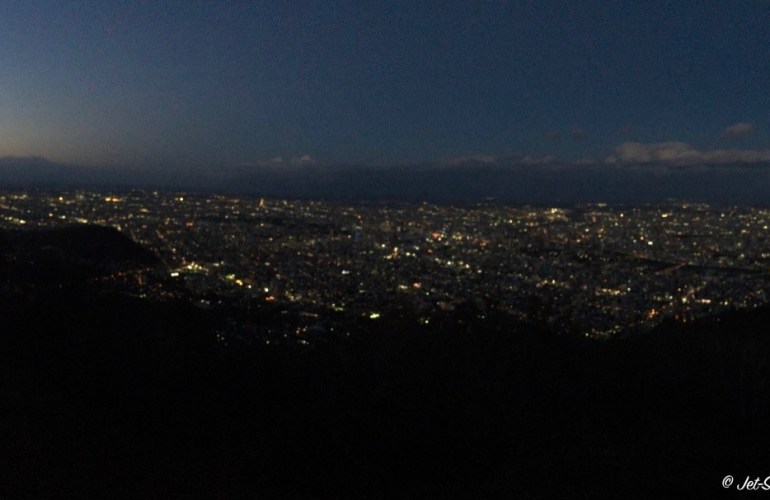
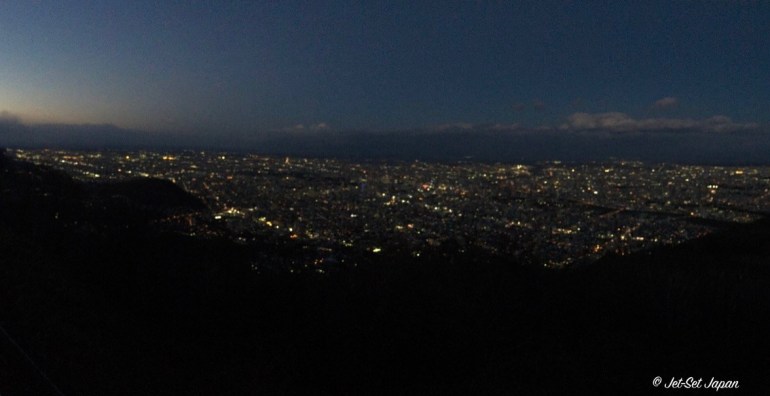
 

Sapporo & Otaru ー Gems of Northern Japan

If you’ve already been to Tokyo, Osaka, Kyoto, or other areas of Japan, or if you just love delicious food and nature, make Sapporo and Otaru next on your list of places to visit in Japan!

Sapporo is the largest city on Hokkaido, which is the northern island of Japan, and Otaru is located about 40 minutes away by train from Sapporo.

When people in Japan think of Hokkaido, the first things that come into mind are great food and beautiful nature. So, in this post, we’re going to briefly introduce some of the food and nature in Sapporo and Otaru.

Grindz (Food!)

This slideshow requires JavaScript.

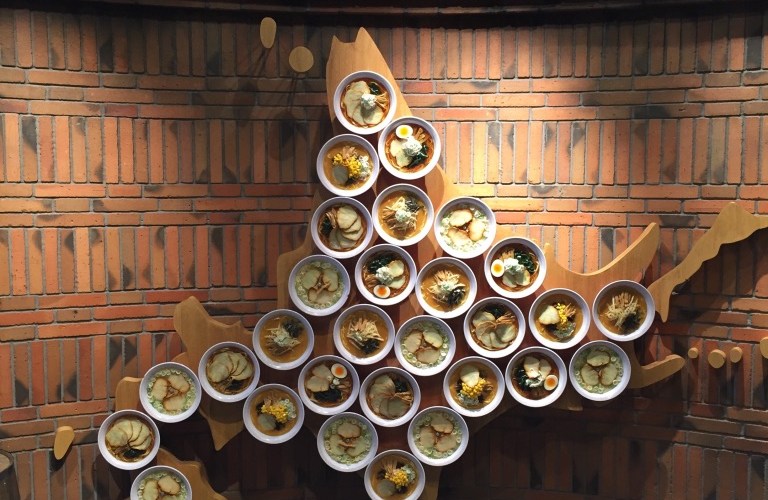
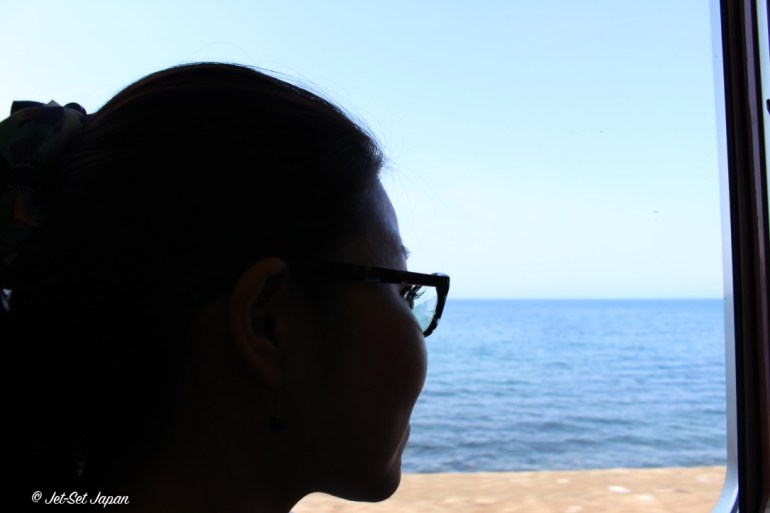
Hokkaido is kind of like the Big Island (of Hawaii) of Japan. It’s the largest island in Japan, and it’s known for fishing and large ranches/farms. Because of this, Sapporo is the place to get some of the best fish and meat (also dairy products) in all of Japan! From, fresh seafood, ramen, to desserts, Sapporo has it all. If you’re looking for ono (delicious) seafood, head over to Otaru! Otaru is a 40 minute train ride Sapporo, and you can enjoy looking at the ocean while leisurely making your way to Otaru.

Otaru
Yuki (Chad’s wife) looking out at the ocean while going to Otaru from Sapporo

Nature

This slideshow requires JavaScript.

Sapporo has flowers, greenery, autumn leaves, and snow, so you can go there any time of year and enjoy nature. The Sapporo Snow Festival is held in early- February in and around Odori Park, and the Sapporo Lilac Festival is held in mid/late-May also in Odori Park. If you want to travel during winter from Hawaii, you need to get winter clothes because it is COLD. If you are unlucky or lucky, depending how you look at it, you can experience a Hokkaido winter in a blizzard. Blizzards are windy, snowy, and cold, but it makes the ramen taste that much better!

Travel Plan Recommendations

  • If you are only going to stay in Sapporo and maybe check out Hakodate, which is about 3 and a half hours away from Sapporo by train, 5-7 days will work. This is if you want to have a relaxing trip.
  • If you are active and want to go to Sapporo and travel to different areas of Hokkaido, at least 7 days would be necessary because Hokkaido is a lot larger than you think (about 32,000 square miles, which is about 8 times larger than the Big Island of Hawaii).
  • If you want to fly into New Chitose Airport, which is about 40 minutes from Sapporo, spend some time in Sapporo before going to another part of Japan, you would need at least 7 days of traveling to fully enjoy your trip. If you do this, there are many options on how to plan your trip depending on where you want to go after Sapporo. If you want to finish your trip off in Tokyo, you could go from Sapporo directly to Tokyo by airplane; another option is to stop off at Sendai by shinkansen to stay a night or two, and then go to Tokyo. If you want to go to Sapporo and then Osaka, you would need to take a flight from New Chitose to Osaka (Kansai Airport or Itami Airport).

All in all, Sapporo and Otaru are great places to visit to each food and go out into nature!

Autumn/Fall ー A Great Season to Travel Japan

This time of year is a good period to start planning for a trip to Japan during Autumn/Fall. What’s good about Japan during the Fall season? We’ll talk about two things which make Fall a great season to go to Japan: 1. Fall leaves, 2. Food, 3. Climate

1. Fall Leaves/Foliage

This slideshow requires JavaScript.

When the leaves start changing colors to bright yellow, red, and orange, it’s also a really comfortable time to visit Japan. The humid summer heat is gone, but the cold of winter has yet to set in.

The best time frames to check out fall leaves are:

  • Hokkaido: Because Hokkaido is large, in northern areas of Hokkaido, leaves will be changing color in late-September, and in southern areas of Hokkaido, leaves will be changing color in mid-October.
  • Tohoku (Aomori, Akita, Iwate, Yamagata, Miyagi, Fukushima): Early-October (from Aomori) to late-November (in Fukushima).
  • Kanto (Ibaraki, Tochigi, Gunma, Saitama, Chiba, Tokyo, Kanagawa): Late-September (from the mountains of Gunma) to early-December (in Kanagawa)
  • Chubu (Niigata, Toyama, Ishikawa, Fukui, Yamanashi, Nagano, Gifu, Shizuoka, Aichi): Late-September (from Kurobe Dam area in Toyama) to early-December (in Aichi)
  • Kansai/Kinki (Shiga, Mie, Kyoto, Nara, Osaka, Wakayama, Hyogo): Early-October (from Shiga) to early-December (in Hyogo)
  • Chugoku (Tottori, Okayama, Shimane, Hiroshima, Yamaguchi): Late-October (from Tottori) to early-December (in Yamaguchi)
  • Shikoku (Kagawa, Tokushima, Ehime, Kochi): Late-October (from the mountains in Tokushima) to early-December (Ehime)
  • Kyushu (Fukuoka, Oita, Miyazaki, Saga, Kumamoto, Nagasaki, Kagoshima): Late-October (from the mountains in Fukuoka) to early-December (in Kagoshima)
  • Okinawa: Leaves change colors on certain trees, but because of the climate, it is different from the rest of Japan.

Because about 70% of Japan is mountains, certain areas in a prefecture will start turning colors compared to areas in lower elevations.

2. Food

Many people say that a lot of the best foods are available during Fall because farmers harvest them before Winter comes. Here’s a short list of what is in season during Fall:

  • Rice
  • Sanma (Pacific saury; we don’t know what this is in English, but we know sanma)
  • Unagi (freshwater eel)
  • Salmon
  • Eggplant
  • Mastsutake Mushrooms
  • Yaki-imo (Sweet potato)
  • Chestnuts

3. Climate

During Fall, coming from Hawaii, we recommend:

  • During the day: long pants, t-shirt, jacket/sweater
  • At night: long pants, long-sleeve shirt, jacket/sweater

If you go around late-November to early-December, you should where a long-sleeve shirt during the day also. If you are sensitive to cold, you can always go to UNIQLO and buy some cheap clothes to keep you warm.

With all of the walking, sightseeing, shopping, eating you will do while traveling in Japan, Fall provides cool, dry weather to enjoy Japan to your heart’s content!

Featured

Why Japan Is THE Travel Destination from Hawaii


1. Reasonable Overall Cost

The first thing you would have to do is buy your ticket to Japan. It goes without saying that ticket prices vary depending on which season you want to visit Japan. For example, if you want to enjoy the sakura or autumn foliage, these are the most expensive seasons to visit Japan, so you will have to pay a premium. In recent years, the average price for tickets to Japan for one person is about $1000 roundtrip.

The next thing you need to take into consideration is the currency exchange rate. Luckily, the Japanese Yen has been weaker than the U.S. dollar. If you have already planned a trip to Japan and haven’t exchanged dollars to yen, keep an eye out on the exchange rate!

Topics related to cost of transportation, food and drink, and shopping will be briefly explained below.

2. Best Public Transportation System in the World

Can you believe that train companies apologize for being 1 minute late?! That is how punctual the train system is in Japan. Not to mention busses connect areas which do not have trains, and these busses run close to their scheduled times even in traffic.

For locals in Japan, costs on public transportation is a little expensive compared to other countries in Asia, but as a visitor to Japan, you can purchase a JR Rail Pass which gives you access to almost all Shinkansen (Bullet Trains) and all local JR Lines. Using the JR Rail Pass and other available rail passes will be explained in detail in a future blog post.

3. Awesome Food and Drink

In Hawaii, our food portions are ridiculously big compared to the portions in Japan, BUT the quality of the food Japan is hard to beat. Also, you can eat quality food at a reasonable price if you look in the right places.

Fruits, vegetables, fish, meat, desserts, Japan has it all for you foodies! If you like to drink wine, whiskey, beer, Japanese sake, Japan has great choices for alcoholic beverages.

4. Fusion of Traditional Culture and Modern Culture

From temples, shrines, and castles to skyscrapers and crazy fashion trends, Japan is a mixture of traditional culture and modern culture.

5. Shopping

For those who like high-end brands, there are areas in Japan, such as Ginza in Tokyo, which have streets lined with these stores. If you are on a tight budget but want to get a bunch of omiyage for your family, friends, and colleagues, you can head over to Daiso to buy things priced at only 100 yen!

6. Nature

Japan is surrounded by the ocean, just like Hawaii, and mountains cover about 70% of the land; so, depending on the season you visit Japan, you can have different experiences outdoors.

In future blog posts, we will explain in detail various aspects of traveling in Japan. Stay tuned for more pictures and blog posts in the future! We’re still developing our content, but also check out our FacebookTwitter, and Instagram.

Mahalo!!!