Featured

Celebrating the New Year in Japan

It’s still New Year’s Eve here in Hawaii, but it’s already New Year’s Day in Japan, so…

Happy New Year!!!

Bringing in the new year is definitely the most important holiday & event in Japan, so there are various customs when doing so.
XaeoYc8HQqu7Zdyh7qk0jw_thumb_3539
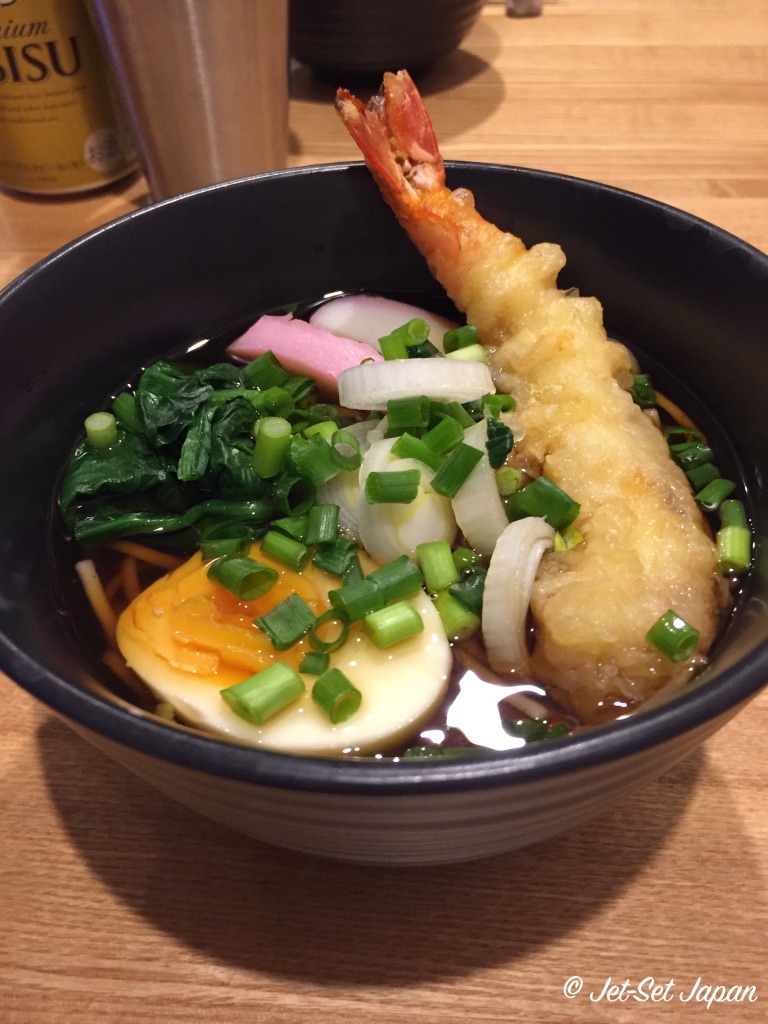
Toshi-koshi soba

For example, toshi-koshi soba (New Year’s Soba) is eaten on New Year’s Eve. Soba is long and thin, and this represents longevity for oneself and one’s family.
UNADJUSTEDNONRAW_thumb_2ccf
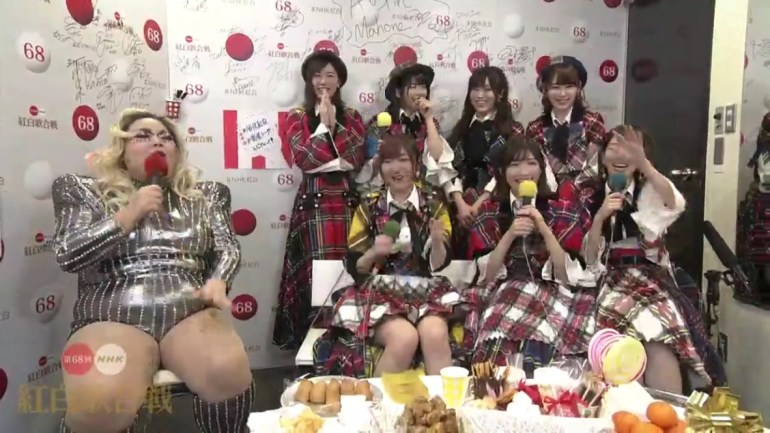
Red & White Song Contest from 2017

This isn’t a traditional custom, but it’s something that many people still do, despite declining viewership over the past few years ー watch the Red & White Song Contest (紅白歌合戦). In Hawaii, this is shown on New Year’s Day, but it’s shown live on New Year’s Eve until a few minutes before midnight in Japan. There’s even an app you can download to receive alerts of when your favorite artist will perform, but of course, you have to be in Japan for alerts.

This slideshow requires JavaScript.

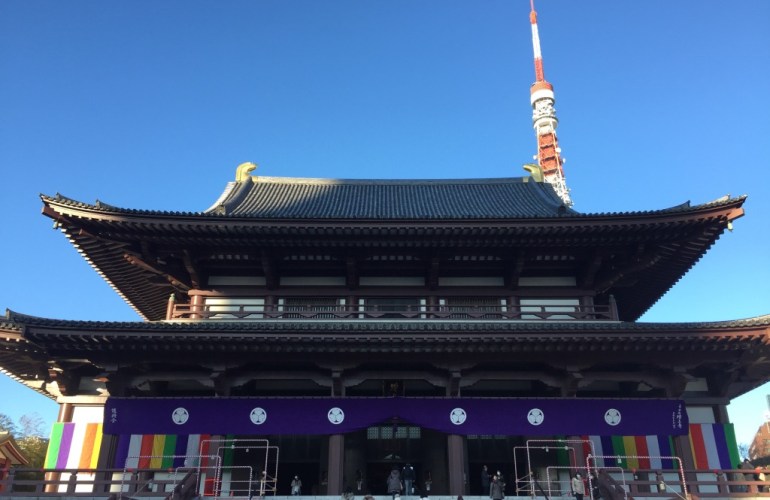
Hatsumoude is the first visit of a shrine or temple of the year. Shrines and temples have vendors selling food and drinks (alcoholic drink also) from well before midnight. When the clock strikes 12, many temples strike the bell (joya no kane) to signal the new year. The photo of Ookunitama Shrine was taken a few days after the New Year, but the photos  taken at Zojoji were taken on the morning of New Year’s Day.

This slideshow requires JavaScript.

Hatsu hi no de is the first sunrise of the year, and crowds of people gather on mountains, along the ocean, tall buildings, or anywhere there is a good view of the sunrise. As the sun starts to peak from the horizon, many people put their hands together in prayer to pray for good health and/or decide their goal for the year.
oIf8n7a%QKOuJ5sI0SoAyw_thumb_3548
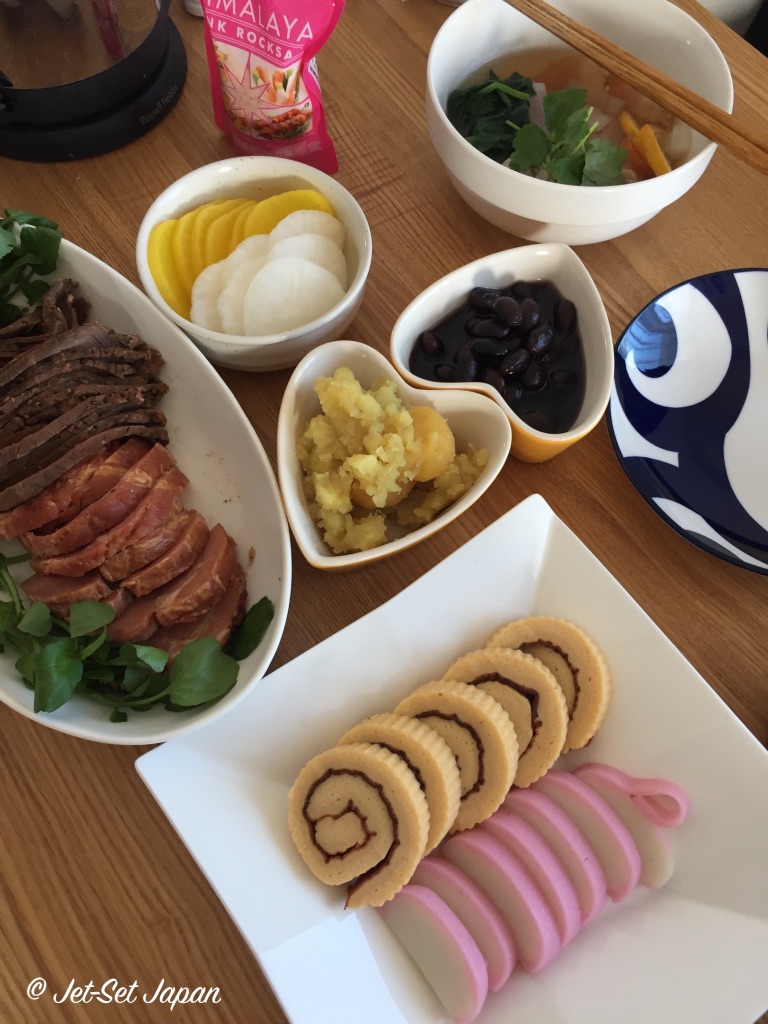
Osechi Ryori (traditional New Year’s Day Meal), Ozouni (New Year’s Day Mochi Soup) on the top, and some other side dishes

Osechi ryori is a traditional New Year’s Day meal where the various dishes and colors have a significant meaning.

Ozouni is a mochi (rice cake) soup that is eaten on New Year’s Day. Depending on the area of Japan, the ingredients, toppings, and taste will be different, but the one thing in common is the mochi. Even if the shape of the mochi used, round or square, is different throughout Japan, mochi is sticky and stretches, so it’s eaten for longevity.

These are just a few customs for New Year’s in Japan, and it’s interesting to see how some of these things have been carried on from one generation to the next here in Hawaii.

From Jet-Set Japan, we wish everybody a Happy New Year!!!
AEON Shopping Mall

Happy Holidays!

Brandon and I have been busy this holiday season, but Brandon and his friends were able to travel to Japan in November for almost two weeks. So, we’re preparing to push out a lot of content over the next few months.

Because it’s the holiday season, our post is about SHOPPING. Japan has tons of department stores and shopping malls where you can easily spend half the day, but let’s take a look at a specific shopping mall ー AEON.

This slideshow requires JavaScript.

The AEON, pronounced ee-ohn, in the photos were taken at AEON Style Shingawa Seaside. Shingawa Seaside Station is on the Rinkai Line and the next station from Tennozu Isle Station, which has direct access to Haneda Airport.

Unfortunately, AEON Style’s homepage is not in English, but here are some details:

Business Hours:
B1 Supermarket: 8:00am-12:00am
B1 Food Court: Restaurants have various business hours
B1 Starbucks: 7:00am-10:00pm

1F, 2F, 3F: Most stores are open from 9:00am-11:00pm, but some stores have different business hours.

Shops:
B1: Supermarket, food court, and other specialty shops.
1F: Women’s fashion, Health & Body Care
2F: Kids’, Baby, Men’s fashion
3F: Interior Decor & Furniture, Electronics

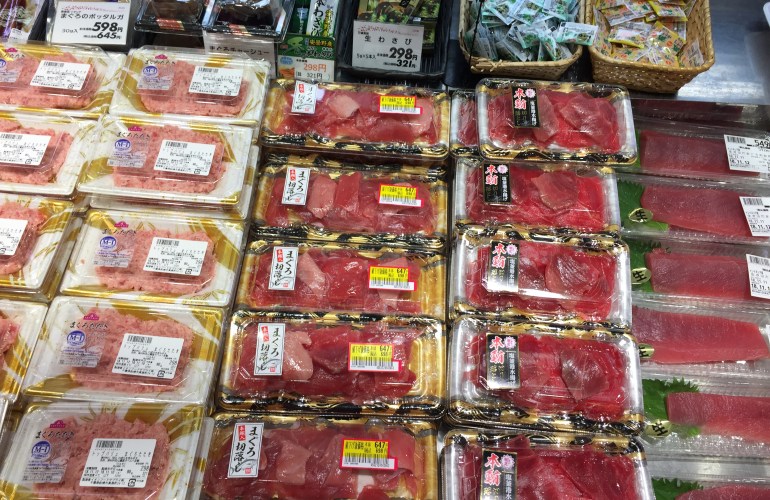
Most importantly, and undoubtedly our favorite area, the supermarket!

This slideshow requires JavaScript.

This slideshow requires JavaScript.

This slideshow requires JavaScript.

This slideshow requires JavaScript.

Here’s a tip for those late nights when you want a snack before bed: supermarkets start putting discount stickers on food after about 7:00 or 8:00pm, so swing by to get a good deal, but if you go too late, the only option you have might be kimchee cucumbers or potato salad.

Keep an eye out for more updates!

(Sapporo Trip – Part 3) Jingisukan (Grilled Mutton)

This slideshow requires JavaScript.

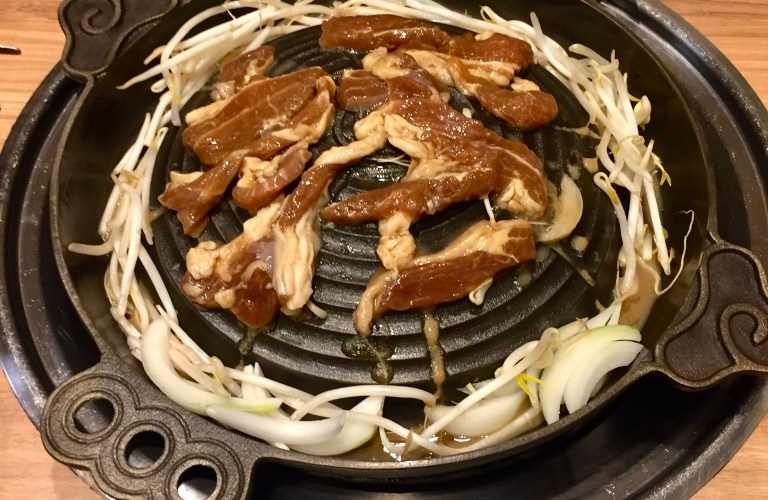
Jingisukan is Japanese for “Genghis Khan” (yes, that Genghis Khan).  According to this website (in Japanese), there are a few schools of though of how this dish got its name, but it seems that the name jingisukan was created during Japan’s occupation of Manchuria or the dish itself is based on a dish that was made in Manchuria. However, Mongolia has no direct connection to jingisukan, except that sheep’s a major staple food in Mongolia.

When grilling and eating jingisukan for the first time, you will recognize the more gamey aroma. So, if you want to ease into it, we recommend ordering jingisukan that is marinated in a special sauce, which is shoyu-(soy sauce) based. The sauce does help with killing some of the gamey-ness.

From the pictures above, you can see that the grill is dome-shaped with the vegetables (bean sprouts and onions) on the bottom edges and the meat goes on dome. The juices from the meat and the sauce, if you choose marinated jingisukan, will drip down and help with cooking the vegetables.

If you love meat, give this local cuisine a try!

Coming soon:

Part 4 – Mt. Moiwa
Part 5 – COSTCO

(Sapporo Trip – Part 2) Japanese Fast Food

Here’s Part 2 of our 5 part series about Brandon’s trip to Sapporo.

When people hear “fast food”, images of McDonald’s, Taco Bell, Burger King, Jack in the Box, and so on will more than likely pop up. Japan does have McDonald’s and Burger King, but the Japanese take on fast food is, for lack of vocabulary, awesome.

Here are a few examples of Japanese fast food:

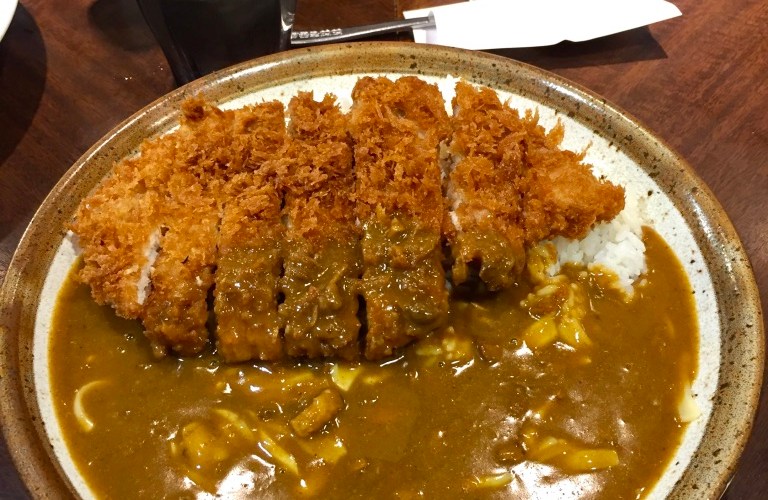
  1. Tonkatsu Curry with Cheese from Curry House CoCo Ichibanya (aka “CoCo Ichi”)

    This slideshow requires JavaScript.

    This homemade tonkatsu curry is available for a limited time throughout the year. For those who don’t know, ton means pork and katsu is short for katsuretsu, which means cutlet in English. Brandon tried this dish for the first time during this last trip, and this is my (Chad’s) favorite CoCo Ichi dish. You can cut the tonkatsu with your spoon!

    When ordering curry at CoCo Ichi, you can choose the amount of rice (“less” 200g and 51 Yen cheaper, “regular” 300g, and “more” which has different amounts) and the spiciness of the curry (mild, regular, 1-10).

    Curry dishes with something deep fried will take about 5 minutes to prepare, if the restaurant isn’t busy.

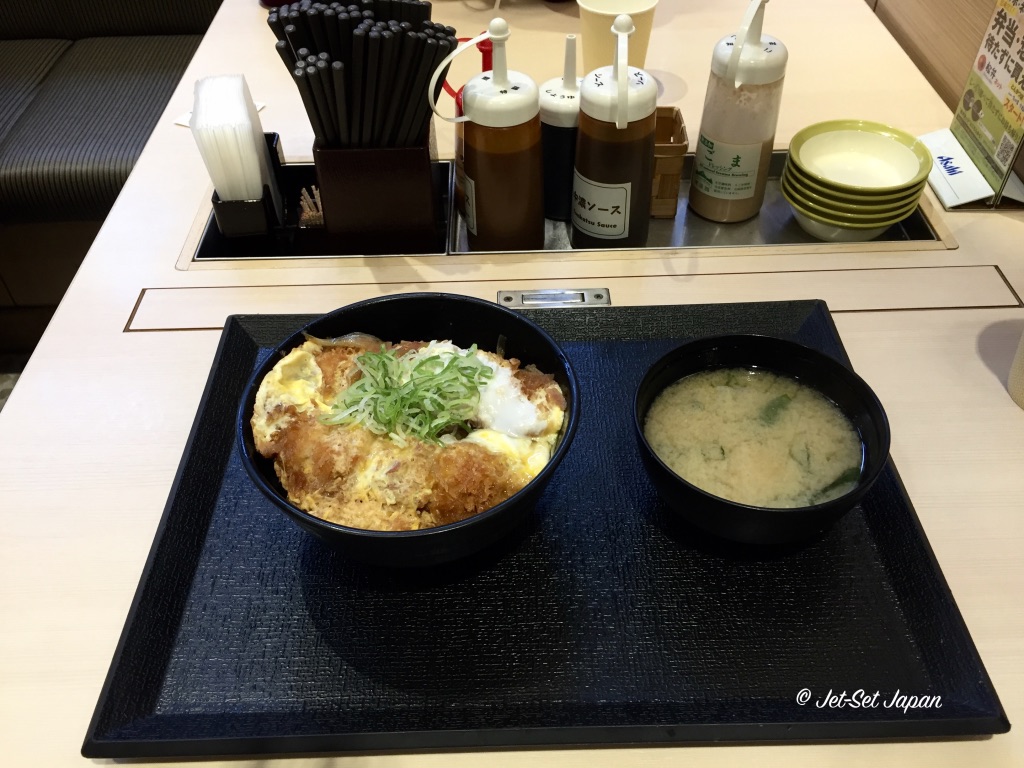
  2. Katsudon
    7PcMciVJQLSSFsNYkHZ2NQ_thumb_34d7
    There are many restaurants that serve katsudontonkatsu donburi (bowl). Deep fried, tonkatsu (breaded, deep fried pork cutlet) on rice, and depending on the region in Japan, the tonkatsu is further cooked in a sweet shoyu (soy sauce) broth with egg or just has a special sauce.
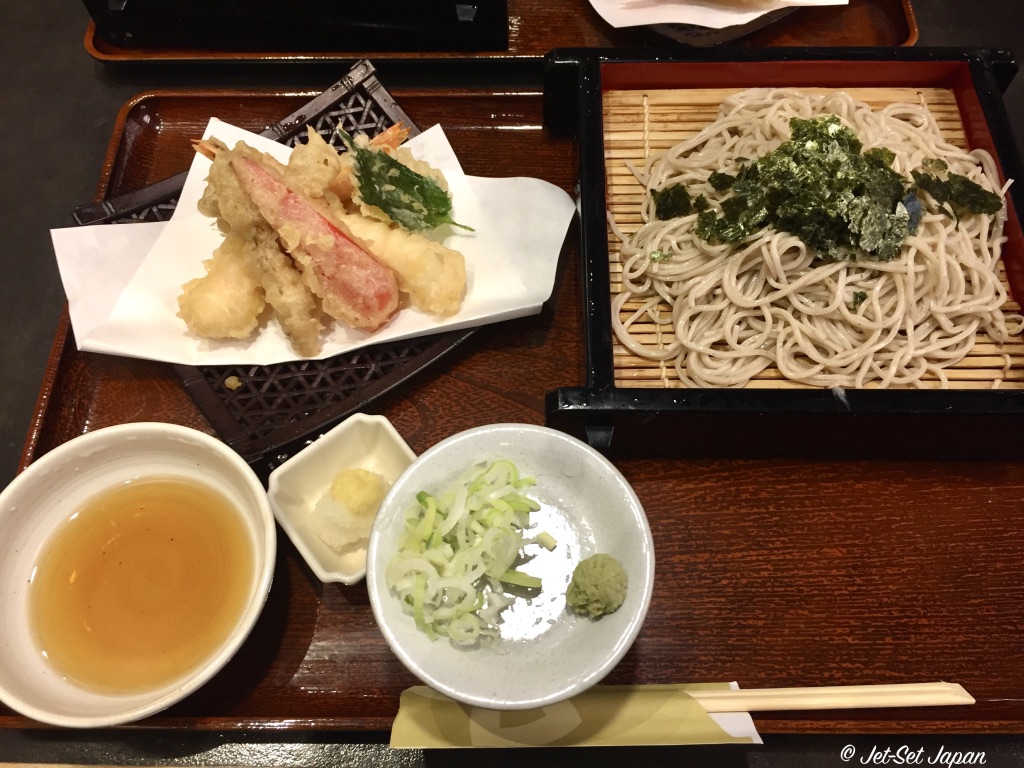
  3. Tenzaru Soba (Tempura & Zaru Soba)
    KXgGT%L0ROGCLyRSGGpgPA_thumb_34f8
    Tempura, which was originally introduce by the Portuguese, is a seafood and/or vegetables that are battered and deep fried.Zaru Soba is cold soba (buckwheat noodles) with a dipping sauce.What are those three small dishes on the bottom? From left to right, dipping sauce, grated daikon (Japanese radish) with grated ginger, leek and wasabi. Many people put all of these into the dipping sauce before eating a bite, and I don’t think this is the right way to eat zaru soba. In my opinion, first, you should eat a few bites of the soba with just the dipping sauce. The water in the soba will slowly dilute the dipping sauce, so this is why you should slowly add daikon, ginger, leek, or wasabi little by little. By doing this, you will be able to enjoy different flavors. Personally, I first add a little daikon and leek, followed by wasabi, and finishing with ginger. I start with the milder daikon and leek before the bold wasabi and finish with refreshing ginger.
  4. Kaiten-zushi

    Kaiten (rotating/spinning)-zushi (sushi) is probably the most well-known Japanese fast food, and the quality of fish available in Sapporo is one of the best in Japan.

There are many other types of Japanese fast food, for example gyūdon (beef bowl), tendon (tempura donburi), and other types that are area-specific. So, don’t be afraid to go out there and explore these different convenient and ono (delicious) fast food dishes!

Coming soon:

Part 3 – Jingisukan (Grilled mutton)
Part 4 – Mt. Moiwa
Part 5 – COSTCO

(Sapporo Trip – Part 1) Susukino – Shopping, Eating, Drinking


This slideshow requires JavaScript.

Brandon went on a trip to Seoul and Sapporo, so here are some pictures and info from his adventure!

This post will focus on the Susukino Area. Susukino is considered to be one of the major entertainment districts in Japan.

The Susukino Area can be accessed by taking the Namboku Line (heading towards Makomanai) from Sapporo Station and getting off at Susukino Station, which is two stops from Sapporo Station.

Shopping:

When visiting Sapporo, Susukino is an area you must visit. For those who enjoy window shopping, there’s a shopping arcade/street (shōtengai, 商店街) called Tanukikoji Shopping Arcade/Street. Tanukikoji is located just north of Susukino Station. In modern Japanese society where numerous shōtengai are steadily becoming empty “ghost-streets”, a stroll through Tanukikoji is experiencing a fusion of traditional and modern Japanese culture.

Eating:

For ramen lovers, Sapporo is heaven. Many visitors check out the Ramen Yokochō (Ramen Alley) in Susukino for their first bowl of ramen, but if you are more adventurous, skip Ramen Yokochō and explore less-traveled side-streets to find your bowl of steaming perfection.

Other than ramen, there are many types of food to make your waistline bulge: jingisukan (“Genghis Khan”: grilled mutton), seafood, and more.

For more photos of food, check out this post we wrote about Sapporo and Otaru.

Drinking:

For those who love their alcohol, Susukino has a lot of places to satisfy your thirst while eating delicious food. Just be careful of drinking too much at a nomihōdai (all-you-can-drink)!

When eating/drinking while traveling Japan, if you want to try many types of food and restaurants, we recommend not eating or drinking too much at one place. However, if you are paying a good amount of money at a certain establishment, get your money’s worth!

Keep an eye out for future posts about more food (of course) and other places to check out while visiting Sapporo!

Part 2  – Japanese Fast Food
Part 3 – Jingisukan (Grilled mutton)
Part 4 – Mt. Moiwa
Part 5 – COSTCO