Getting Around Japan ー Trains, Buses, Taxis/Uber, and Walking

Trains/Subway

This is the most common way of getting around most areas. The train/subway system in large cities looks complicated because of the various train/subway lines and large number of train stations, but it is a very efficient and convenient system. Based on this fact, we’ll offer a few tips for travelers:

  1. Avoid rush hour (if possible): Depending on which area of Japan you are traveling in and which train line you want to take, rush hour will be different times of day. Generally, rush hour is from 6:30am-9:00am and 5:00pm-7:00pm. If you think you can take your suitcase(s) on a train during rush hour, you will have a terrible experience of trying force your way on to a packed train with every passenger in the area looking at you.
  2. Purchase a chargeable “IC Card”: The most well-known IC Card is JR’s SUICA, but each region Japan has it’s own IC card, so it is kind of a collectable item as well. After purchasing an IC card, you can charge it up with money and not only go through the automated gates after swiping your card over the reader, you can also use it at stores to buy things. We usually use IC cards to buy things at convenience stores (7-Eleven, Lawson, Family Mart, etc.) when buying beer, food, and other stuff.
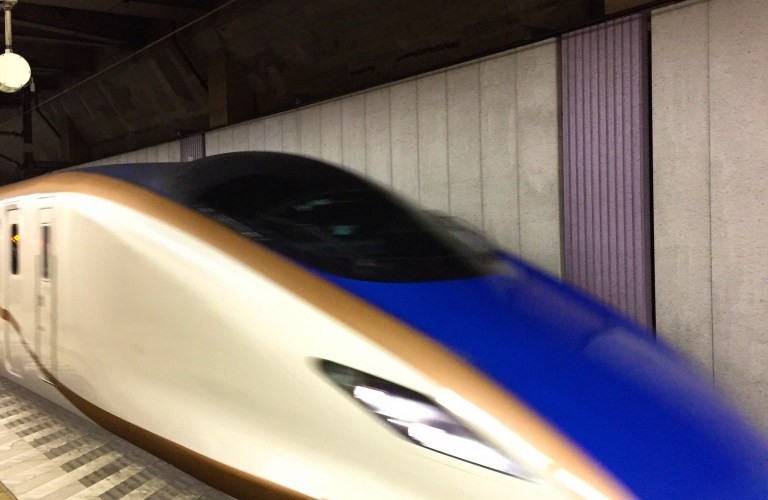
  3. Get a JR Pass if you are going to ride the shinkansen: There are two types of JR Passes: Green Car and Ordinary. The Green Car pass is more expensive because you can reserve seats in the “Green Car”, which is a first-class. To be quite honest, Ordinary passes are good enough because seats in “economy” class on a shinkansen are comfortable enough, and I’d rather spend my money on eating awesome food. Also, both the Green Car and Ordinary passes are available as a 7-day pass, 14-day pass, or 21-day pass. You can validate your pass within one month from receiving your pass, so you can validate your pass depending on your travel plans.

Buses

In short, buses will take you where trains are not available. In Tokyo, many buses connect areas that have train stations which are not directly connected by a train line. In other areas, buses connect train stations with sightseeing areas and/or residential areas. Buses are usually on time, but it’s good to always arrive a little early just in case.

Taxis/Uber

I used taxis frequently after getting surgery on my leg, and it’s a great way to get around if you have cash and want to enjoy your personal space. When you hail a taxi in Japan, the taxi driver will open the door by the push of a button from driver’s seat. If you don’t speak Japanese, we recommend having a note of the address of where you want to go because taxi driver’s can use their car navigation to take you to your destination. In Tokyo, because of the upcoming Olympics, many taxi companies have implemented multilingual “communication sheets” so customers can, perhaps, smoothly communicate where they want to go. If you speak Japanese and want to get some recommendations for anything, taxi drivers are great sources of information!

Regarding Uber, I haven’t used it in Japan, but it is available. It might be good to use Uber after late at night after trains have stopped and when taxis are more expensive and all taxis already have a fare.

Walking

Walking is a major part of traveling in Japan. On average, we walk 5-8 miles a day, so if you are not in shape, we recommend doing some light walking. Taking this into consideration, planning out the places you are going to visit along with places you can take breaks (lunch, tea, coffee, alcohol, etc.) will help with making your trip more enjoyable.

This topic is just an introduction to getting around Japan, so we will write more about some of these topics in the future.
Planning a Trip to Japan ー Booking Flights, Accommodations, and Transportation

Ryokan

Booking Flights

Prices for flights to Japan from Hawaii range from $650 to about $1000. However, if you travel on off-days, like Tuesday or Thursday, ticket prices are generally cheaper. So, if you are able to fly on a weekday, you can find some great deals.

We usually use Hawaiian Airlines because we fly out from Hilo, so we have to stop over in Honolulu to catch a flight to Japan. For those of you on the Big Island and you use Kona International Airport, Hawaiian Airlines has direct flights from Kona to Tokyo International Airport, which is commonly known as Haneda Airport.

Another important thing for travelers going to Tokyo, there are two major possible airports you can use: Narita International Airport and Tokyo International Airport (Haneda Airport). Narita International Airport is located in Chiba Prefecture, which is located next to Tokyo, but it is about 60-90 minutes away from central areas in Tokyo. Tokyo International Airport is located in Tokyo Bay, and you can take a direct train to Shinagawa, which is a major hub in Tokyo. So, depending where you are staying in Tokyo, we strongly recommend looking at how far you will have to travel from the airport to your hotel.

One last tip, which is connected to the next section about transportation. For example, you want to visit both Tokyo and Osaka in the same trip. How would you book your flights? We would recommend flying into Haneda Airport so you can check out Tokyo. Next, you would take a shinkansen (bullet train) to Osaka so you can do some sightseeing there. Lastly, you can fly out of Kansai International Airport, which is located near Osaka and also accessible directly from Kyoto. Flying into Kansai International Airport, and then flying out of Haneda Airport is another option as well.

Transportation (An Introduction)

Traveling to different parts of Japan when you are visiting might seem complicated, but once you understand how the system works, there’s no limit to where you can go. We will explain this topic in more detail in a future post, but there are rail passes, like the JR Rail Pass, which you can use to ride shinkansen that will take you across the country in a matter of hours.

Accommodations

Japan has a ton of options when it comes to accommodations. You can stay at a capsule hotel, where you can sleep in a small tube, or 5-star hotels. Capsule hotels are usually around $30-$50 a night, and 5-star hotels start at about $500 a night. We have found 4-star hotels for $150-$200 a night on weekdays when we are lucky to find this deal. So if you have already bought your tickets, and you are still looking for accommodations, keep doing your research! You might find a great hotel in a convenient area for an awesome deal!

Regarding the size of rooms, hotel rooms in Japan are generally small, about 200 sq. ft. So, it would be best to expect to have a smaller room.

Also, prices for hotels will vary depending on distance from a train station and also where the hotel is located. As mentioned above, if you land in Haneda Airport and want to stay near Shinagawa Station, which has direct access to Haneda Airport and is also a station where the shinkansen stops, prices will more than likely be a little higher. Taking all of this into consideration, we usually book a hotel that is in the $100-range and is also a 5-minute walk to the nearest train station.

Business hotels are another interesting option. Business hotel rooms are extremely small. You have a small desk, a small refrigerator under the desk, a TV on the desk, and your bed right next to the desk. So, if you have more than 2 suitcases, there’s almost no room to walk. However, if you are on a tight budget, prices per night at business hotels usually run under $100. We like business hotels because we explore all day and party hard in to the night! We only need a place for our luggage, take a shower, and to sleep.

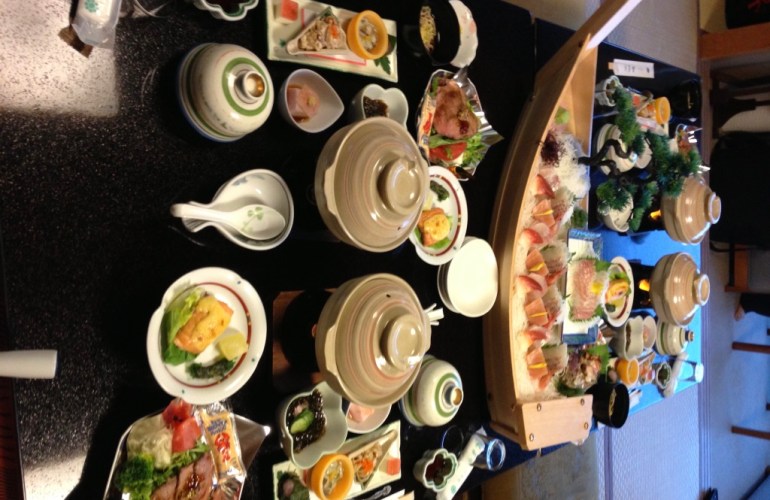
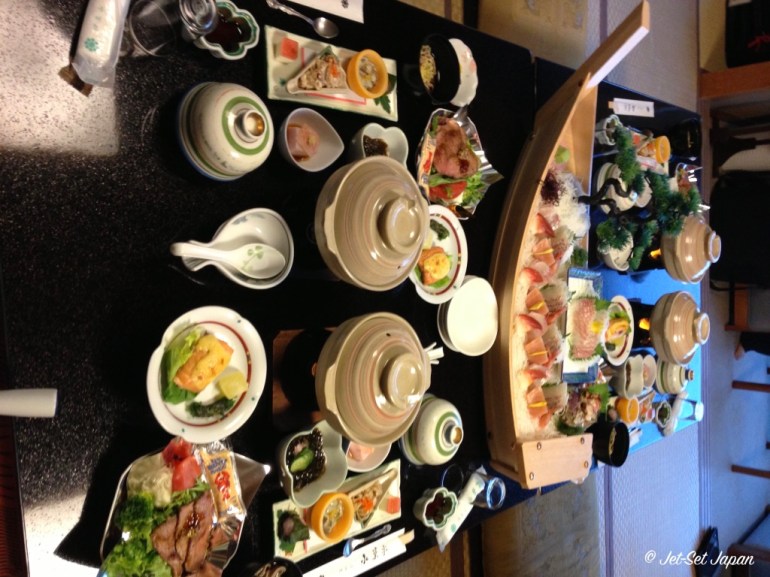
If you really want a Japanese experience, you can stay at a ryokan (Japanese-style inn) that has an onsen (hot springs). The featured image is of a dinner at a ryokan, and it was ono!


Getting a U.S. Passport and Japanese Yen

Getting a U.S. Passport

1. Application Form
If:

  • you are applying for the first time
  • you under 16 years old
  • your previous passport was issued when your under 16 years old
  • your passport was stolen, damaged, or lost
  • your passport was issued more than 15 years ago

you need to apply in person using a DS-11 form.

2. Copy of Supporting Documents

  • Citizenship evidence
    • U.S. birth certificate
    • Certificate of Naturalization
    • Certificate of Citizenship
    • Certificate of Birth (If born outside of the U.S.)
  • Identification
    • Valid U.S. passport (can be expired)
    • Valid U.S. driver’s license
    • Certificate of Naturalization or Citizenship
    • Government employee ID
    • U.S. military ID
    • Valid foreign passport
    • If you use an out-of-state ID, another ID must be shown.
  • Proof of relationship for children under 16 years old

Photocopies should:

  1. Be readable
  2. On white 8.5″ x 11″ standard paper
  3. Black and white
  4. Single-sided for all documents including identification. If you have information on two sides of a document, copy the front and back on separate sheets of paper.

3. Passport Photo

  • 2″ x 2″ color passport photo.

4. Fees

*VERY IMPORTANT: When applying for a passport, you have the option of applying for a passport book, passport card, or passport book and passport card. To travel to Japan you ABSOLUTELY need a PASSPORT BOOK. Passport cards are only valid for travel within the United States, to Canada, to Mexico, to Bermuda, and to the Caribbean.

*Also, DO NOT book your tickets to Japan before you receive your passport!

Japanese Yen

Japanese Yen

General rule for calculating how much Japanese Yen (represented by the “¥”), move the decimal twice to the left, and that’s approximately how much it is worth in dollars. If you want an exact amount, check the currency exchange rate.

Looking and the currency,
Bills:
¥10,000 is about $100 (bottom of left fan)
¥5000 is about $50 (bottom of right fan)
¥2000 is about $20 (these bills not really in circulation in Japan, but you might get some when exchanging money) (top of right fan)
¥1000 is about $10 (top of left fan)

Coins:
¥500 is about $5 (biggest coin that is gold-colored)
¥100 is about $1 (silver-colored coin without a hole)
¥50 is about $0.50 (silver-colored coin with a hole)
¥10 is about $0.10 (bronze-colored coin)
¥5 is about $0.05 (gold-colored coin with hole)
¥1 is about $0.01 (smallest and lightest coin)

It is recommended that you exchange dollars to yen before you depart for Japan.

More explanations about booking flights/accommodations and transportation in Japan are coming up in the near future!

Parks, Rivers/Ocean, & Mountains ー Nature in Japan

Featured Image: Na no Hana (Rape Blossoms) in Hararikyu Gardens.

Because Japan is an island nation, it’s possible for visitors to check out parks in the city, head to the mountains, and relax riverside or beachside in one trip. In this post, we will show pictures of parks, bodies of water, and mountains from all over Japan.

Parks

This slideshow requires JavaScript.

Japan has immaculate Japanese gardens and parks. Depending on the time of year you visit, it’s possible to see various types of flowers and other plants, except during winter when everything is in hibernation mode.

Rivers/Ocean

This slideshow requires JavaScript.

Because the majority of Japan’s land is mountainous, there are a lot of rivers throughout the country. A lot of these rivers provide for great views during sunset and even a place for people to picnic. Regarding beaches, coming from Hawaii, most of us are spoiled with beautiful beaches (except maybe Hilo, where we’re from), but the sunrises and sunsets along the coastlines of Japan are absolutely picturesque.

Mountains

This slideshow requires JavaScript.

In the mountain areas of Japan, visitors can find shrines, temples, onsen (hot springs). For those who are adventurous , there are shrines where you can go hiking into the mountains to another shrine which is located deeper in the mountains. And some shrines will let you stay there if you make reservations.

This post is just an introduction to the great nature spots in Japan. Look out for future posts about nature in Japan!

Shopping in Japan

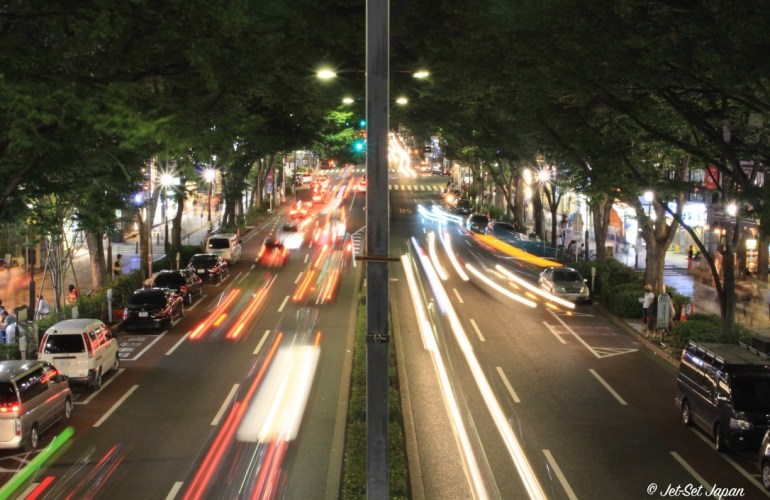
Feature Image: The keyaki namiki (zelkova tree-lined street) which runs from Harajuku to Omotesando.

This slideshow requires JavaScript.

Every major city in Japan will have at least one major shopping district. In Tokyo, there’s Shinjuku, Shibuya, Roppongi, and Ginza to name just a few places. In Osaka, there’s Umeda, Dotonbori, Namba. In this post, we will introduce a few areas and stores to shop at.

Department Stores

Marui, Takashimaya, Mitsukoshi-Isetan are just a few department store groups which are nationwide. A variety of high-end stores can be found within department stores. Other reasonable stores, such as UNIQLO and MUJI, can also be found in department stores. The good thing about department stores is that everything is inside, so if it’s hot, cold, or raining, you don’t have to worry about the weather outside; also, there are usually a lot of restaurants on the top floors, so you can take a break from shopping a get some food or coffee.

Electronics

Japan has a reputation for their high-quality electronics: Sony, Panasonic, Nikon, Canon, Nintendo, and many more. If you’re a gamer, into anime or manga, Japanese idols, or looking for any kind of electronics, Akihabara is the place to go. Even if you aren’t looking to buy electronics, it’s cool to go and just walk around Akihabara for a few hours.

Bargain/Reasonable Shopping

Daiso is the place to go to buy all kinds of things for 100 Yen. Some Daiso stores have multiple floors or are huge, so be careful not to rack up a big bill at checkout!

Seria is another place to go to for a bargain on “miscellaneous goods” (zakka in Japanese). Miscellaneous goods would be clocks, pen holders, and other things you would put around your house.

If you need to get clothes because you forgot something or didn’t prepare for the weather, head over to UNIQLO where there prices are reasonable. If you’re more into H&M, there are H&M stores all over Japan.

Snacks


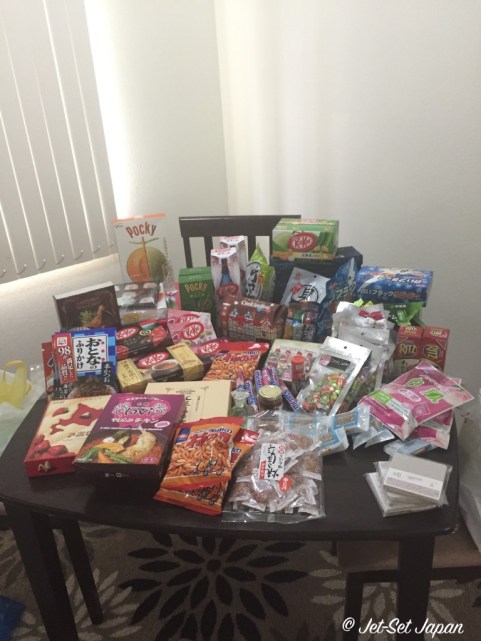
Japan has a lot of great snacks! Make sure you bring a extra suitcase just for snacks also!!!

Shopping