Today, we’re going to introduce Fukuoka and Beppu, which are both on the island of Kyushu.
Fukuoka
Getting there:
Fukuoka is a prefecture in Kyushu, and Fukuoka City is the largest city in Kyushu and has a good mixture of both traditional and modern culture.
To travel from Hawaii to Fukuoka, Hawaiian Airlines cancelled their non-stop flight from Honolulu to Fukuoka, so we recommend flying into Kansai International Airport (Osaka), and then taking a shinkansen from Shin-Osaka to Hakata Station, which is about a 3-hour train ride. If you are landing in Tokyo and then going to Fukuoka or plan to go to Tokyo from Fukuoka, taking a shinkansen will take about 6 hours from Shinagawa Station and Tokyo Station. Flights from Haneda to Fukuoka take a little less than 2 hours. If you want to fully utilize your JR Pass to save money, taking a shinkansen is the way to go. Also, because of travel time, combining Fukuoka and Osaka into the same trip will maximize your travel experience.
Important Note: The main station in Fukuoka is NOT Fukuoka Station; the main station is Hakata Station.
Ramen


Hakata Ramen is the local-style of ramen in Fukuoka. The soup broth is made from pork bones which gives it a brown-yellow coloration. The broth is rich and will cling on to noodles well.
When ordering Hakata Ramen, you can choose the firmness of your noodles. Generally, there’s 5 levels: extra soft, soft, regular, firm, extra firm. Extra soft noodles will break easily, so we don’t recommend getting extra soft noodles. Soft noodles don’t break as easily, blend with the broth, and will kind of dissolve in your mouth. Regular noddles are good for those who haven’t eaten too much authentic ramen before. So, start at regular, and then test out other types of noodles to find your zone. Firm noodles tend not to blend too much with the broth, but you can enjoy both the flavor of the broth and the flavor of the noodles. Extra firm noodles are for those who know how to slurp up noodles and like to taste the rich broth “crisply”.
If you are a foodie, you have to check out the yatai (street vendors) of Hakata!
Our personal to-do list:
Places we haven’t been to but want to go to include: Futamigaura and Kawachi Wisteria Garden. Also, because Fukuoka is located on the Sea of Japan side of Kyushu, sunsets are amazing along the coastline.
Beppu
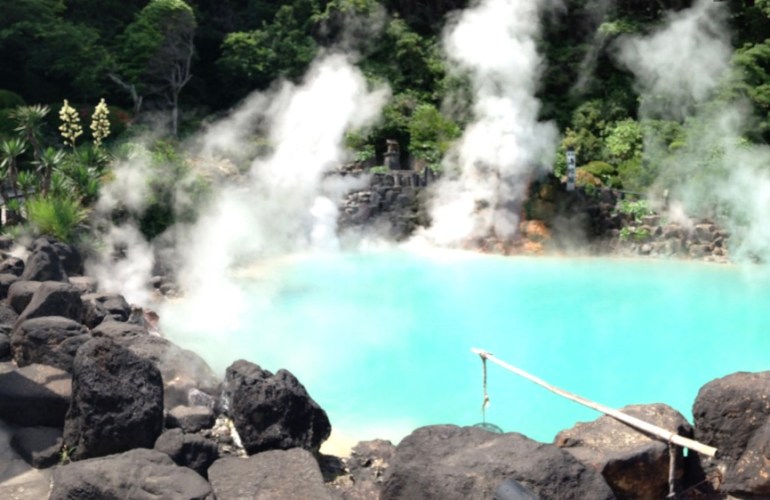
Beppu is located in Oita Prefecture and is one of the best areas for onsen (hot springs). Each onsen has different medicinal benefits from nicer skin to a recuperating from fatigue. Not to mention, each ryokan (Japanese-style inn) will include a Japanese-style meal.
Beppu stretches from the sea to the mountains, like an ahupua’a here in Hawaii, so there are a lot of different kinds of delicious food to eat: from different types of meat dishes to seafood.
If you’re traveling to the Kansai Area and have more than 7 days, checking out Fukuoka for a few days and Beppu for a night can fit into your schedule. If you just want to travel around Kyushu, at least a week (preferably 10 days) would be needed to visit all of the prefectures there: Fukuoka, Oita, Miyazaki, Kumamoto, Kagoshima, Shiga, Nagasaki.


 Jet-Set Japan