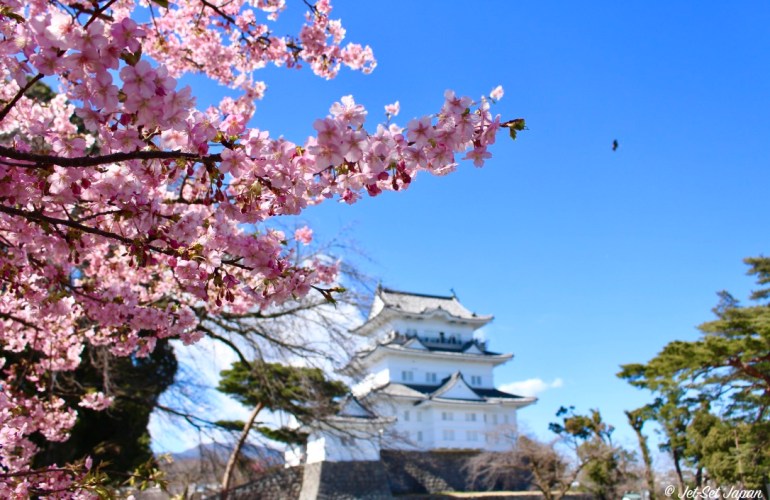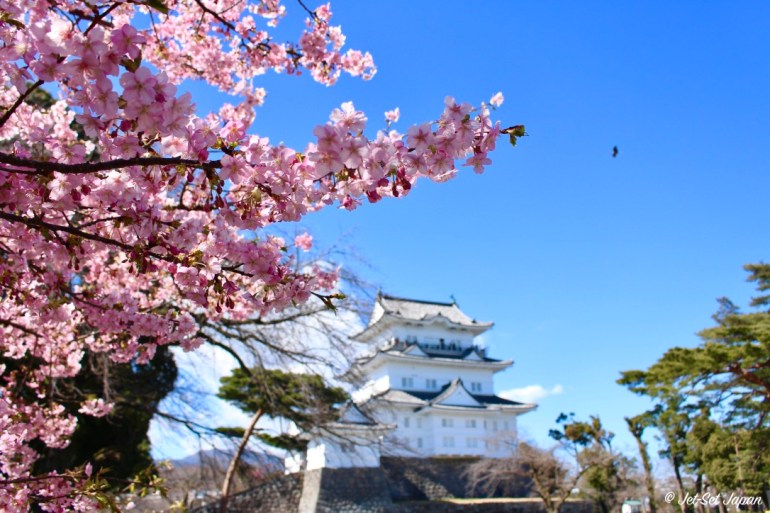
Fukuoka & Beppu ー Great Food, Relaxing Onsen

Today, we’re going to introduce Fukuoka and Beppu, which are both on the island of Kyushu.

Fukuoka

This slideshow requires JavaScript.

Getting there:

Fukuoka is a prefecture in Kyushu, and Fukuoka City is the largest city in Kyushu and has a good mixture of both traditional and modern culture.

To travel from Hawaii to Fukuoka, Hawaiian Airlines cancelled their non-stop flight from Honolulu to Fukuoka, so we recommend flying into Kansai International Airport (Osaka), and then taking a shinkansen from Shin-Osaka to Hakata Station, which is about a 3-hour train ride. If you are landing in Tokyo and then going to Fukuoka or plan to go to Tokyo from Fukuoka, taking a shinkansen will take about 6 hours from Shinagawa Station and Tokyo Station. Flights from Haneda to Fukuoka take a little less than 2 hours. If you want to fully utilize your JR Pass to save money, taking a shinkansen is the way to go. Also, because of travel time, combining Fukuoka and Osaka into the same trip will maximize your travel experience.

Important Note: The main station in Fukuoka is NOT Fukuoka Station; the main station is Hakata Station.

Ramen

Hakata Ramen is the local-style of ramen in Fukuoka. The soup broth is made from pork bones which gives it a brown-yellow coloration. The broth is rich and will cling on to noodles well.

When ordering Hakata Ramen, you can choose the firmness of your noodles. Generally, there’s 5 levels: extra soft, soft, regular, firm, extra firm. Extra soft noodles will break easily, so we don’t recommend getting extra soft noodles. Soft noodles don’t break as easily, blend with the broth, and will kind of dissolve in your mouth. Regular noddles are good for those who haven’t eaten too much authentic ramen before. So, start at regular, and then test out other types of noodles to find your zone. Firm noodles tend not to blend  too much with the broth, but you can enjoy both the flavor of the broth and the flavor of the noodles. Extra firm noodles are for those who know how to slurp up noodles and like to taste the rich broth “crisply”.

If you are a foodie, you have to check out the yatai (street vendors) of Hakata!

Our personal to-do list:

Places we haven’t been to but want to go to include: Futamigaura and Kawachi Wisteria Garden. Also, because Fukuoka is located on the Sea of Japan side of Kyushu, sunsets are amazing along the coastline.

Beppu

This slideshow requires JavaScript.

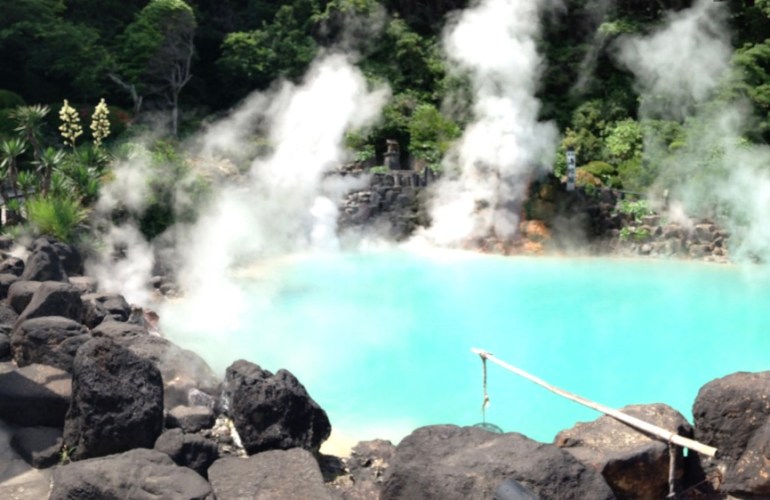
Beppu is located in Oita Prefecture and is one of the best areas for onsen (hot springs). Each onsen has different medicinal benefits from nicer skin to a recuperating from fatigue. Not to mention, each ryokan (Japanese-style inn) will include a Japanese-style meal.

Beppu stretches from the sea to the mountains, like an ahupua’a here in Hawaii, so there are a lot of different kinds of delicious food to eat: from different types of meat dishes to seafood.

If you’re traveling to the Kansai Area and have more than 7 days, checking out Fukuoka for a few days and Beppu for a night can fit into your schedule. If you just want to travel around Kyushu, at least a week (preferably 10 days) would be needed to visit all of the prefectures there: Fukuoka, Oita, Miyazaki, Kumamoto, Kagoshima, Shiga, Nagasaki.
Featured

Recommended Destinations for Your First Trip to Japan

Happy Aloha Friday!!!

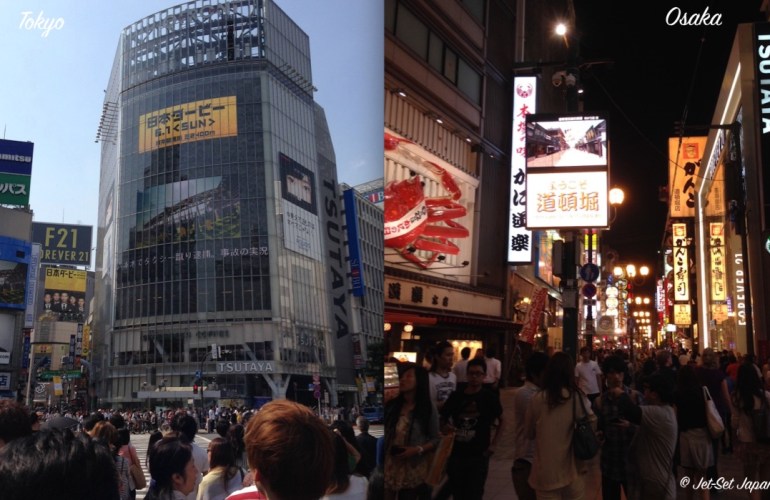
Planning your first trip to Japan, but where to go? We recommend going to Osaka and/or Tokyo. If you have only a short period for your vacation or if you are on a tight budget, we think going to Osaka is best for your first trip. If you have time and enough money, we think going to Osaka first, and then going to Tokyo is a good plan. In this post, we’re going to explain why Osaka and/or Tokyo are good destinations for your first trip to Japan.

Osaka

  • Osaka culture – In my (Chad’s) experience, locals in Osaka are really honest and genuine. Not saying that people outside of Osaka are not honest and genuine, but the people in Osaka (well, Kansai in general) are very easy to connect to because they are usually outgoing. If you go to a bar and meet a few locals, it’s easy to start a conversation. You must be thinking, “I don’t speak Japanese, so how will we communicate?” But there are people who will try to have a conversation even though they don’t have English speaking skills. It helps to speak a little Japanese, but I think making an effort is what is most important.
  • Great access to other areas of the Kansai Region – From Osaka, you can go to every prefecture in the Kansai Region (Kyoto, Hyogo, Nara, Wakayama, Mie, Shiga) without riding a shinkansen. In other words, you can Osaka as a hub to travel around the Kansai Region, which is rich in Traditional Japanese Culture. Historically, Kyoto was the capital of Japan for a little over 1000 years, and Nara was the first capital of Japan. So, if you want to get in touch with the roots of Japanese Culture and History, Kansai is the place to go.
  • Traditional and modern Japan – Osaka is a fusion of both traditional and modern Japanese culture. During the spring, you can enjoy the sakura around Osaka Castle during the day, and eat good food and drink alcohol at night around Dotonbori, Namba, or Shinsaibashi (to name a few places) at night.
  • Awesome grinds (food)! – Osaka has GREAT food! Okonomiyaki, kushiyaki, takoyaki, yakiniku are just a few of the super ono local foods you can each in Osaka.

Tokyo

  • Multicultural metropolitan – Without a doubt, Tokyo is the most multicultural city in Japan because of the sheer amount diversity in the city. If you want to eat Japanese food, of course you’ll be able to find good quality food in Tokyo. If you feel like eating great pizza, there are a lot of authentic Italian restaurants with delicious pizza. If you feel like Nepalese curry, Tokyo’s got it! You get the picture, right? You can find all kinds of food in Tokyo to satisfy your craving. Another thing is Tokyo is relatively multilingual, which means you can find English signs almost everywhere.  Also, compared to other areas of Japan, a lot of people speak enough English to help you if you are lost.
  • Convenience – First and foremost, trains throughout Japan are on-time most of the time, but if you miss a train in Tokyo, the next train will come in 5 to 10 minutes. So, it’s not a big deal if you miss one train. Next, if you’re craving some ramen in the middle of the night, you’ll find a place to eat. Tokyo is the city-that-never-sleeps.

In conclusion:

1. Osaka-only plan: If you’re short on time and money, and want to see both traditional and modern Japan hit up Osaka. If you’re in Osaka for 5-7 days, you can check out more places than if you were in Tokyo for 5-7 days.

2. Tokyo-only plan: If you want to jump straight into one of the most populated cities in the world, and also want to be on full-gear for your entire trip, head over to Tokyo.

3. Osaka-to-Tokyo plan: If you have the time and money, and want to ease into Japan, head over to Osaka before Tokyo. So, you have to first fly into Kansai International Airport, and then book a flight out from either Narita or Haneda (we recommend Haneda).

4. Tokyo-to-Osaka plan: If you have time and money, and you want to jump into the excitement (and craziness) that is Tokyo before taking it (a little) easy, go to Tokyo and then Osaka.

Introduction to Traditional Japan

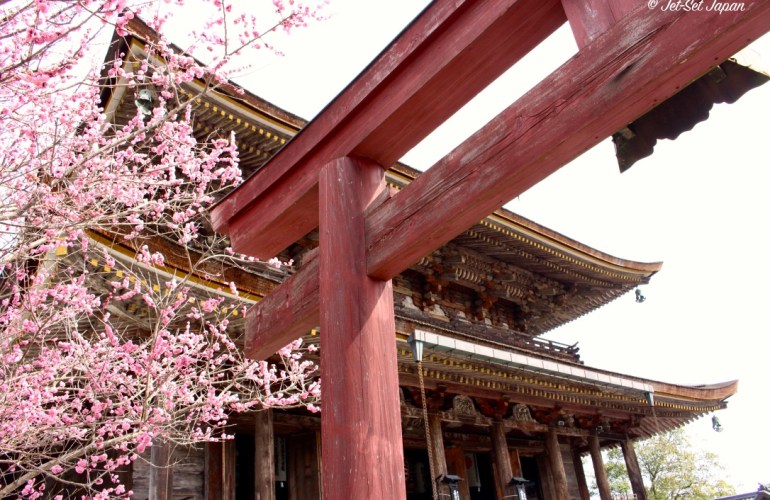
Featured picture is of Kinpusenji Temple in late March with ume (plum) blossoms.

In this post, we will introduce 3 things about traditional Japanese Culture: castles, temples, shrines.

Castles

This slideshow requires JavaScript.

Throughout Japan’s history, there was a long period where the country was feudalistic. Daimyo (feudal lords) ruled not only their land and people, but they also controlled their own armies. These powerful feudal lords built castles to protect their territory. In the pictures above, there are pictures of the castle keep and various areas of the main castle grounds, but in history, the castle referred to the surrounding area (castle town). When visiting a castle, the interior is usually a small museum where you can find historical facts about its history. If you want to see nice views of the surrounding city, you can go all the way to the top of the castle keep. Just be careful of strong winds!

Temples

This slideshow requires JavaScript.

A lot of people confuse temples and shrines, but here is the easiest way to differentiate the two: shrines have torii gates (check pictures below); temples don’t have torii gates. However, there might be a shrine on the temple grounds. In one of the pictures above, you can see a small, orange torii gate on the left of the main hall of Kinpusenji Temple. The other picture is of Zojoji Temple, which is near Tokyo Tower.

Shrines

This slideshow requires JavaScript.

Now that we know structural difference between a shrine and a temple, let’s take a look at the religious difference. Temples = Buddhism; Shrines = ShintoShinto has many gods/deities, and different gods/deities are enshrined at different shrines. The most divine shrine in all of Japan is Ise Grand Shrine. Amaterasu, the God of the Sun, is enshrined there. Another extremely important shrine is Izumo Shrine. This shrine was dedicated to Ookuninonushi (Grand Master of the Land), who is the god of building the land, amongst other things. In this aspect, Shinto is similar to Hawaiian mythology because Hawaiian mythology has many gods who have different powers, authority, and personalities: Amaterasu is like Pele.

When visiting castles, temples, and shrines, visitors should always mind their manners, but it is hard to do so if you don’t know what to do. We’ll write blog posts in the future about manners at certain places.

We’ll also write posts about other topics!

Mahalo for visiting today!

Featured

Why Japan Is THE Travel Destination from Hawaii


1. Reasonable Overall Cost

The first thing you would have to do is buy your ticket to Japan. It goes without saying that ticket prices vary depending on which season you want to visit Japan. For example, if you want to enjoy the sakura or autumn foliage, these are the most expensive seasons to visit Japan, so you will have to pay a premium. In recent years, the average price for tickets to Japan for one person is about $1000 roundtrip.

The next thing you need to take into consideration is the currency exchange rate. Luckily, the Japanese Yen has been weaker than the U.S. dollar. If you have already planned a trip to Japan and haven’t exchanged dollars to yen, keep an eye out on the exchange rate!

Topics related to cost of transportation, food and drink, and shopping will be briefly explained below.

2. Best Public Transportation System in the World

Can you believe that train companies apologize for being 1 minute late?! That is how punctual the train system is in Japan. Not to mention busses connect areas which do not have trains, and these busses run close to their scheduled times even in traffic.

For locals in Japan, costs on public transportation is a little expensive compared to other countries in Asia, but as a visitor to Japan, you can purchase a JR Rail Pass which gives you access to almost all Shinkansen (Bullet Trains) and all local JR Lines. Using the JR Rail Pass and other available rail passes will be explained in detail in a future blog post.

3. Awesome Food and Drink

In Hawaii, our food portions are ridiculously big compared to the portions in Japan, BUT the quality of the food Japan is hard to beat. Also, you can eat quality food at a reasonable price if you look in the right places.

Fruits, vegetables, fish, meat, desserts, Japan has it all for you foodies! If you like to drink wine, whiskey, beer, Japanese sake, Japan has great choices for alcoholic beverages.

4. Fusion of Traditional Culture and Modern Culture

From temples, shrines, and castles to skyscrapers and crazy fashion trends, Japan is a mixture of traditional culture and modern culture.

5. Shopping

For those who like high-end brands, there are areas in Japan, such as Ginza in Tokyo, which have streets lined with these stores. If you are on a tight budget but want to get a bunch of omiyage for your family, friends, and colleagues, you can head over to Daiso to buy things priced at only 100 yen!

6. Nature

Japan is surrounded by the ocean, just like Hawaii, and mountains cover about 70% of the land; so, depending on the season you visit Japan, you can have different experiences outdoors.

In future blog posts, we will explain in detail various aspects of traveling in Japan. Stay tuned for more pictures and blog posts in the future! We’re still developing our content, but also check out our FacebookTwitter, and Instagram.

Mahalo!!!