Featured

(Sapporo Trip – Part 4) Mt. Moiwa

EHNSz2RmRYisgCIimjL9Fw_thumb_34f1

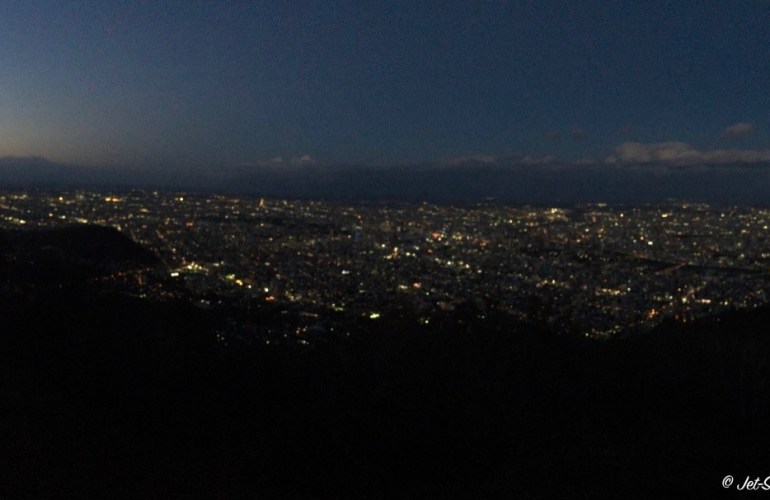
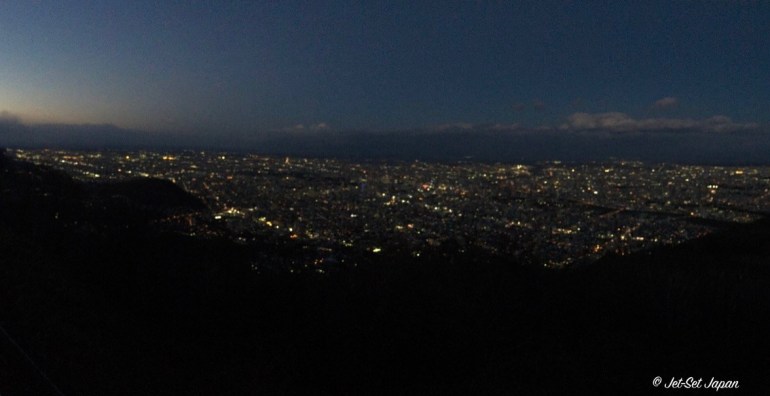
Part 4 of Brandon’s Sapporo trip is Mt. Moiwa, which is one of the best spots for viewing Sapporo’s city lights.

Mt. Moiwa is located about 45 minutes from Susukino. This is how to get there:


This slideshow requires JavaScript.

From the 4 pictures in the slideshow above:

  • DO NOT GO THIS WAY Picture: When searching on Google Maps on how to get to the Mt. Moiwa Ropeway from Susukino, it will tell you to take the Sapporo Shiden street car and get off at Denshajigyosho-mae Station. If you take this route, you will have to walk up steep stairs and then pass a temple with a cemetary, which is not very scenic.
  • The BETTER Way: Take the Sapporo Shiden street car to Ropeway Iriguchi Station. There is a free shuttle bus from the Station to the Mt. Moiwa Ropeway (5 minute ride) that departs about every 20 minutes, which is recommended if you or your somebody in your party has difficulty walking.
  • From Ropeway Iriguchi Station: It is a 5-minute walk uphill.
  • Ropeway & Minicar Tickets: First the ropeway will take you most of the way up the mountain, and then you will transfer to a minicar that will take you to the summit. It’s 1700 Yen for a roundtrip ticket for both the ropeway and minicar.

Here’s the view when you get there:


This slideshow requires JavaScript.

Some tips when going to the top of Mt. Moiwa:

  • There is an omiyage (souvenir shop), vending machines with hot and cold drinks, and a restaurant, but we recommend bringing your own snacks, o-bentos (lunch boxes), and drinks.
  • If you are visiting during cooler/colder weather, pack some warm clothes buy hokkairo (hand warmers) that can be bought in convenience stores or pharmacies.
  • The summit can get quite windy, so make sure your things don’t get blown away.
  • Be flexible with your planning because it might be cloudy on one day but sunny on another day.

Last part is:

Part 5 – COSTCO
(Sapporo Trip – Part 2) Japanese Fast Food

Here’s Part 2 of our 5 part series about Brandon’s trip to Sapporo.

When people hear “fast food”, images of McDonald’s, Taco Bell, Burger King, Jack in the Box, and so on will more than likely pop up. Japan does have McDonald’s and Burger King, but the Japanese take on fast food is, for lack of vocabulary, awesome.

Here are a few examples of Japanese fast food:

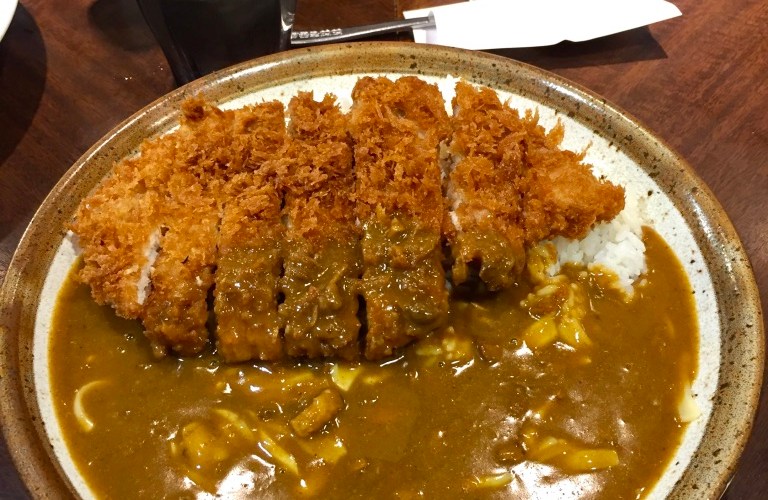
  1. Tonkatsu Curry with Cheese from Curry House CoCo Ichibanya (aka “CoCo Ichi”)

    This slideshow requires JavaScript.

    This homemade tonkatsu curry is available for a limited time throughout the year. For those who don’t know, ton means pork and katsu is short for katsuretsu, which means cutlet in English. Brandon tried this dish for the first time during this last trip, and this is my (Chad’s) favorite CoCo Ichi dish. You can cut the tonkatsu with your spoon!

    When ordering curry at CoCo Ichi, you can choose the amount of rice (“less” 200g and 51 Yen cheaper, “regular” 300g, and “more” which has different amounts) and the spiciness of the curry (mild, regular, 1-10).

    Curry dishes with something deep fried will take about 5 minutes to prepare, if the restaurant isn’t busy.

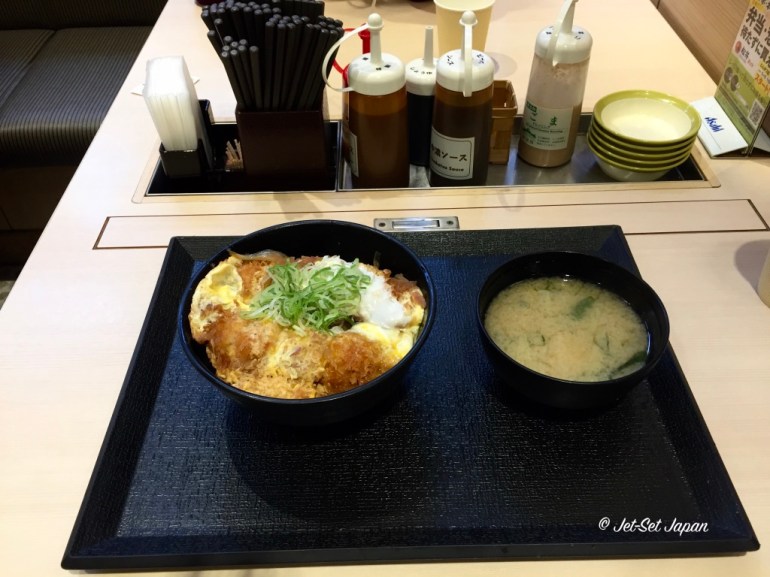
  2. Katsudon
    7PcMciVJQLSSFsNYkHZ2NQ_thumb_34d7
    There are many restaurants that serve katsudontonkatsu donburi (bowl). Deep fried, tonkatsu (breaded, deep fried pork cutlet) on rice, and depending on the region in Japan, the tonkatsu is further cooked in a sweet shoyu (soy sauce) broth with egg or just has a special sauce.
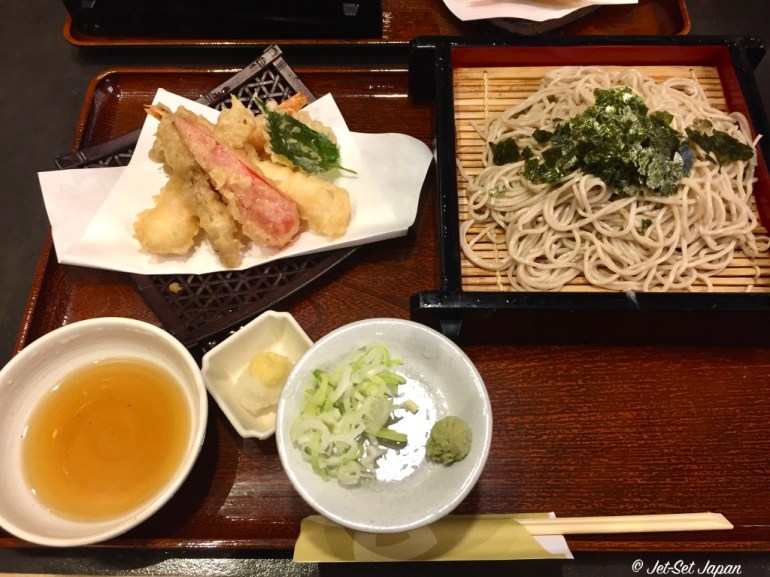
  3. Tenzaru Soba (Tempura & Zaru Soba)
    KXgGT%L0ROGCLyRSGGpgPA_thumb_34f8
    Tempura, which was originally introduce by the Portuguese, is a seafood and/or vegetables that are battered and deep fried.Zaru Soba is cold soba (buckwheat noodles) with a dipping sauce.What are those three small dishes on the bottom? From left to right, dipping sauce, grated daikon (Japanese radish) with grated ginger, leek and wasabi. Many people put all of these into the dipping sauce before eating a bite, and I don’t think this is the right way to eat zaru soba. In my opinion, first, you should eat a few bites of the soba with just the dipping sauce. The water in the soba will slowly dilute the dipping sauce, so this is why you should slowly add daikon, ginger, leek, or wasabi little by little. By doing this, you will be able to enjoy different flavors. Personally, I first add a little daikon and leek, followed by wasabi, and finishing with ginger. I start with the milder daikon and leek before the bold wasabi and finish with refreshing ginger.
  4. Kaiten-zushi

    Kaiten (rotating/spinning)-zushi (sushi) is probably the most well-known Japanese fast food, and the quality of fish available in Sapporo is one of the best in Japan.

There are many other types of Japanese fast food, for example gyūdon (beef bowl), tendon (tempura donburi), and other types that are area-specific. So, don’t be afraid to go out there and explore these different convenient and ono (delicious) fast food dishes!

Coming soon:

Part 3 – Jingisukan (Grilled mutton)
Part 4 – Mt. Moiwa
Part 5 – COSTCO

(Sapporo Trip – Part 1) Susukino – Shopping, Eating, Drinking


This slideshow requires JavaScript.

Brandon went on a trip to Seoul and Sapporo, so here are some pictures and info from his adventure!

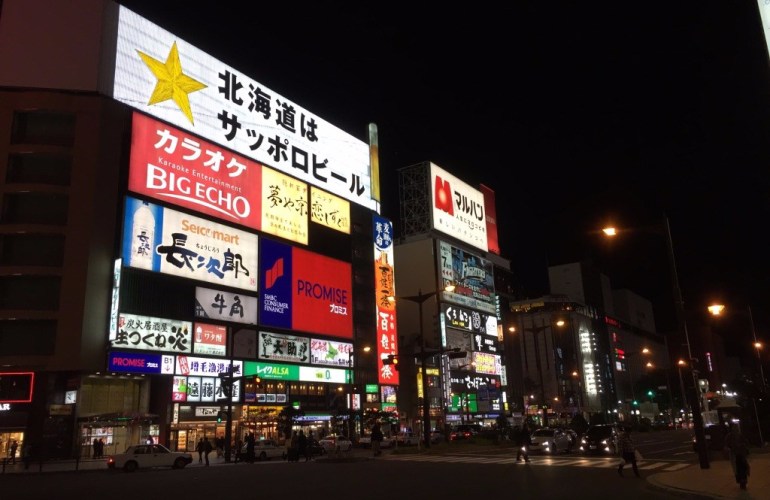
This post will focus on the Susukino Area. Susukino is considered to be one of the major entertainment districts in Japan.

The Susukino Area can be accessed by taking the Namboku Line (heading towards Makomanai) from Sapporo Station and getting off at Susukino Station, which is two stops from Sapporo Station.

Shopping:

When visiting Sapporo, Susukino is an area you must visit. For those who enjoy window shopping, there’s a shopping arcade/street (shōtengai, 商店街) called Tanukikoji Shopping Arcade/Street. Tanukikoji is located just north of Susukino Station. In modern Japanese society where numerous shōtengai are steadily becoming empty “ghost-streets”, a stroll through Tanukikoji is experiencing a fusion of traditional and modern Japanese culture.

Eating:

For ramen lovers, Sapporo is heaven. Many visitors check out the Ramen Yokochō (Ramen Alley) in Susukino for their first bowl of ramen, but if you are more adventurous, skip Ramen Yokochō and explore less-traveled side-streets to find your bowl of steaming perfection.

Other than ramen, there are many types of food to make your waistline bulge: jingisukan (“Genghis Khan”: grilled mutton), seafood, and more.

For more photos of food, check out this post we wrote about Sapporo and Otaru.

Drinking:

For those who love their alcohol, Susukino has a lot of places to satisfy your thirst while eating delicious food. Just be careful of drinking too much at a nomihōdai (all-you-can-drink)!

When eating/drinking while traveling Japan, if you want to try many types of food and restaurants, we recommend not eating or drinking too much at one place. However, if you are paying a good amount of money at a certain establishment, get your money’s worth!

Keep an eye out for future posts about more food (of course) and other places to check out while visiting Sapporo!

Part 2  – Japanese Fast Food
Part 3 – Jingisukan (Grilled mutton)
Part 4 – Mt. Moiwa
Part 5 – COSTCO

What to Do When You’re in Japan During a Typhoon

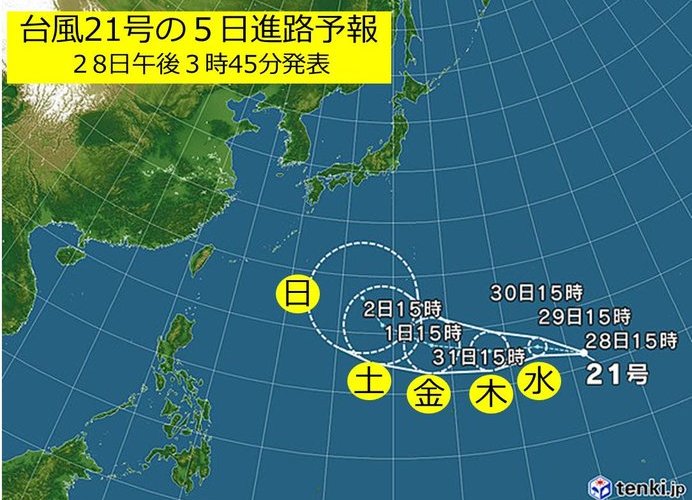
(Featured Image from tenki.jp) Info about Typhoon Jebi’s expected path.

Hurricane Lane has passed through Hawaii, and we got about 50 inches of rain here on the east side of the Big Island. To prepare for a hurricane in Hawaii, people will fill up their car(s) with gas, buy a lot of water, food, ice, batteries, etc., and tape and/or board up their windows.

What if you’re visiting Japan when a typhoon is going to hit where you are?

  1. Typhoon Season
    • Typhoon season typically starts in (late) June and end in November, but there is a significant increase in typhoons during August and September.
  2. General Information about Typhoons
    • In Japan, typhoons aren’t given names, they are numbered, but information in English will include a typhoon’s name.
    • Intensity (from least to greatest): tropical depression, tropical storm, severe tropical storm, typhoon (strong, very strong, violent)
  3. Weather Updates Sources
  4. Water, Food, and Other Necessities
    • A typhoon usually passes through an area within 12 hours, but it’s always good to buy water and food that won’t spoil.
    • If you need medication, toiletries, or other items, you should buy these beforehand.
  5. Utilities
    • Depending on where you are and how severe the weather is, utilities might go out. So, stay updated about the strength and path of a storm.
  6. Transportation
    • When the weather gets bad or is expected to get bad, flights will be canceled, and train service will be halted.
  7. Wind, Rain, Flooding, and High Seas
    • Stay indoors because of high winds and a lot of rain. Also, stay away from rivers, streams, canals because of flash floods/flooding, and also stay away from the coastline because of surges, which can be about 30 feet tall.
  8. Temperature
    • During summer, temperatures get a little cooler, but the day after a typhoon passes gets really hot.

If you are in Japan when a typhoon hits, please be careful and stay safe!

Autumn/Fall ー A Great Season to Travel Japan

This time of year is a good period to start planning for a trip to Japan during Autumn/Fall. What’s good about Japan during the Fall season? We’ll talk about two things which make Fall a great season to go to Japan: 1. Fall leaves, 2. Food, 3. Climate

1. Fall Leaves/Foliage

This slideshow requires JavaScript.

When the leaves start changing colors to bright yellow, red, and orange, it’s also a really comfortable time to visit Japan. The humid summer heat is gone, but the cold of winter has yet to set in.

The best time frames to check out fall leaves are:

  • Hokkaido: Because Hokkaido is large, in northern areas of Hokkaido, leaves will be changing color in late-September, and in southern areas of Hokkaido, leaves will be changing color in mid-October.
  • Tohoku (Aomori, Akita, Iwate, Yamagata, Miyagi, Fukushima): Early-October (from Aomori) to late-November (in Fukushima).
  • Kanto (Ibaraki, Tochigi, Gunma, Saitama, Chiba, Tokyo, Kanagawa): Late-September (from the mountains of Gunma) to early-December (in Kanagawa)
  • Chubu (Niigata, Toyama, Ishikawa, Fukui, Yamanashi, Nagano, Gifu, Shizuoka, Aichi): Late-September (from Kurobe Dam area in Toyama) to early-December (in Aichi)
  • Kansai/Kinki (Shiga, Mie, Kyoto, Nara, Osaka, Wakayama, Hyogo): Early-October (from Shiga) to early-December (in Hyogo)
  • Chugoku (Tottori, Okayama, Shimane, Hiroshima, Yamaguchi): Late-October (from Tottori) to early-December (in Yamaguchi)
  • Shikoku (Kagawa, Tokushima, Ehime, Kochi): Late-October (from the mountains in Tokushima) to early-December (Ehime)
  • Kyushu (Fukuoka, Oita, Miyazaki, Saga, Kumamoto, Nagasaki, Kagoshima): Late-October (from the mountains in Fukuoka) to early-December (in Kagoshima)
  • Okinawa: Leaves change colors on certain trees, but because of the climate, it is different from the rest of Japan.

Because about 70% of Japan is mountains, certain areas in a prefecture will start turning colors compared to areas in lower elevations.

2. Food

Many people say that a lot of the best foods are available during Fall because farmers harvest them before Winter comes. Here’s a short list of what is in season during Fall:

  • Rice
  • Sanma (Pacific saury; we don’t know what this is in English, but we know sanma)
  • Unagi (freshwater eel)
  • Salmon
  • Eggplant
  • Mastsutake Mushrooms
  • Yaki-imo (Sweet potato)
  • Chestnuts

3. Climate

During Fall, coming from Hawaii, we recommend:

  • During the day: long pants, t-shirt, jacket/sweater
  • At night: long pants, long-sleeve shirt, jacket/sweater

If you go around late-November to early-December, you should where a long-sleeve shirt during the day also. If you are sensitive to cold, you can always go to UNIQLO and buy some cheap clothes to keep you warm.

With all of the walking, sightseeing, shopping, eating you will do while traveling in Japan, Fall provides cool, dry weather to enjoy Japan to your heart’s content!