Booking Flights
Prices for flights to Japan from Hawaii range from $650 to about $1000. However, if you travel on off-days, like Tuesday or Thursday, ticket prices are generally cheaper. So, if you are able to fly on a weekday, you can find some great deals.
We usually use Hawaiian Airlines because we fly out from Hilo, so we have to stop over in Honolulu to catch a flight to Japan. For those of you on the Big Island and you use Kona International Airport, Hawaiian Airlines has direct flights from Kona to Tokyo International Airport, which is commonly known as Haneda Airport.
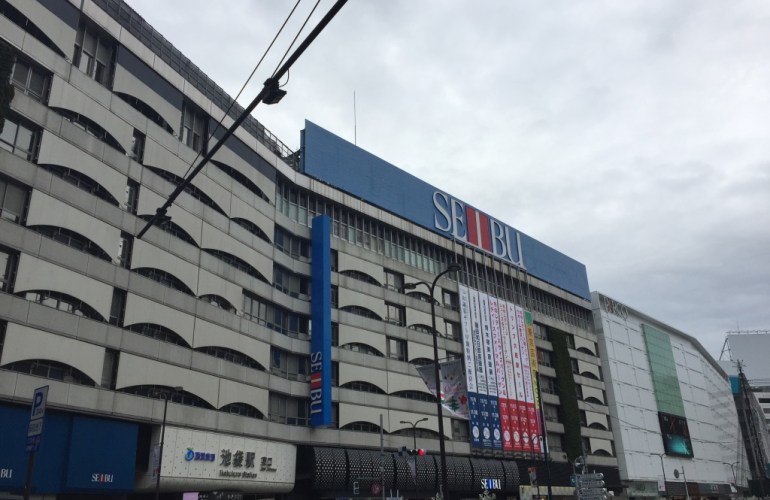
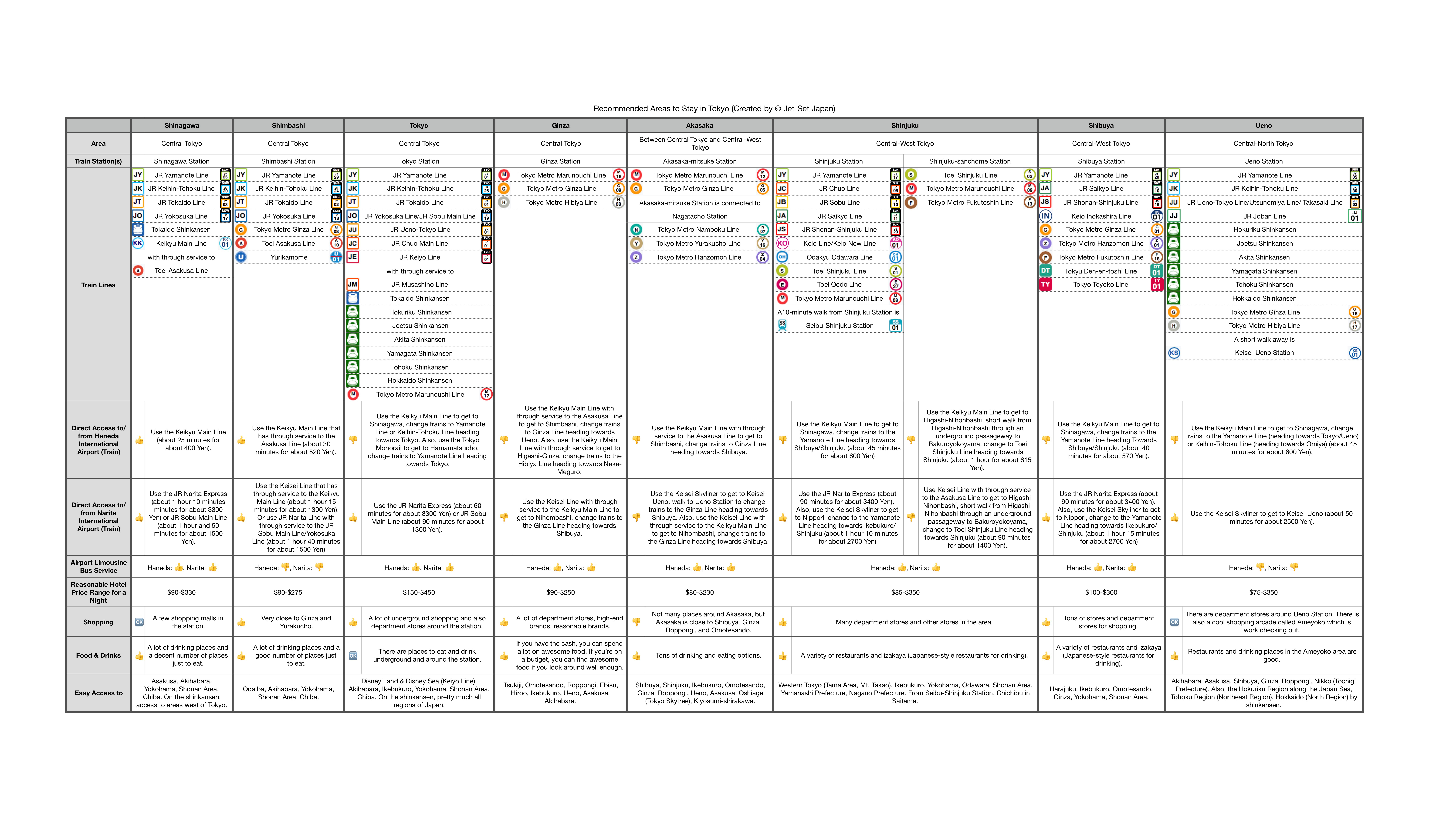
Another important thing for travelers going to Tokyo, there are two major possible airports you can use: Narita International Airport and Tokyo International Airport (Haneda Airport). Narita International Airport is located in Chiba Prefecture, which is located next to Tokyo, but it is about 60-90 minutes away from central areas in Tokyo. Tokyo International Airport is located in Tokyo Bay, and you can take a direct train to Shinagawa, which is a major hub in Tokyo. So, depending where you are staying in Tokyo, we strongly recommend looking at how far you will have to travel from the airport to your hotel.
One last tip, which is connected to the next section about transportation. For example, you want to visit both Tokyo and Osaka in the same trip. How would you book your flights? We would recommend flying into Haneda Airport so you can check out Tokyo. Next, you would take a shinkansen (bullet train) to Osaka so you can do some sightseeing there. Lastly, you can fly out of Kansai International Airport, which is located near Osaka and also accessible directly from Kyoto. Flying into Kansai International Airport, and then flying out of Haneda Airport is another option as well.
Transportation (An Introduction)
Traveling to different parts of Japan when you are visiting might seem complicated, but once you understand how the system works, there’s no limit to where you can go. We will explain this topic in more detail in a future post, but there are rail passes, like the JR Rail Pass, which you can use to ride shinkansen that will take you across the country in a matter of hours.
Accommodations
Japan has a ton of options when it comes to accommodations. You can stay at a capsule hotel, where you can sleep in a small tube, or 5-star hotels. Capsule hotels are usually around $30-$50 a night, and 5-star hotels start at about $500 a night. We have found 4-star hotels for $150-$200 a night on weekdays when we are lucky to find this deal. So if you have already bought your tickets, and you are still looking for accommodations, keep doing your research! You might find a great hotel in a convenient area for an awesome deal!
Regarding the size of rooms, hotel rooms in Japan are generally small, about 200 sq. ft. So, it would be best to expect to have a smaller room.
Also, prices for hotels will vary depending on distance from a train station and also where the hotel is located. As mentioned above, if you land in Haneda Airport and want to stay near Shinagawa Station, which has direct access to Haneda Airport and is also a station where the shinkansen stops, prices will more than likely be a little higher. Taking all of this into consideration, we usually book a hotel that is in the $100-range and is also a 5-minute walk to the nearest train station.
Business hotels are another interesting option. Business hotel rooms are extremely small. You have a small desk, a small refrigerator under the desk, a TV on the desk, and your bed right next to the desk. So, if you have more than 2 suitcases, there’s almost no room to walk. However, if you are on a tight budget, prices per night at business hotels usually run under $100. We like business hotels because we explore all day and party hard in to the night! We only need a place for our luggage, take a shower, and to sleep.
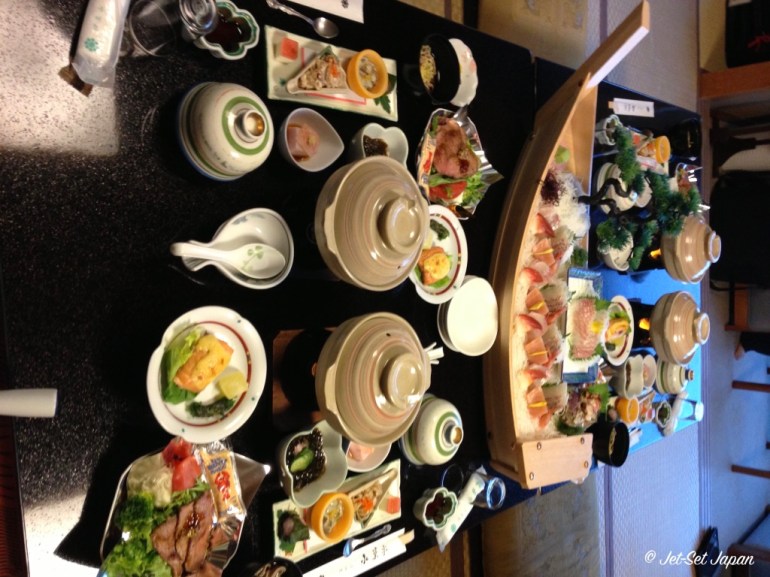
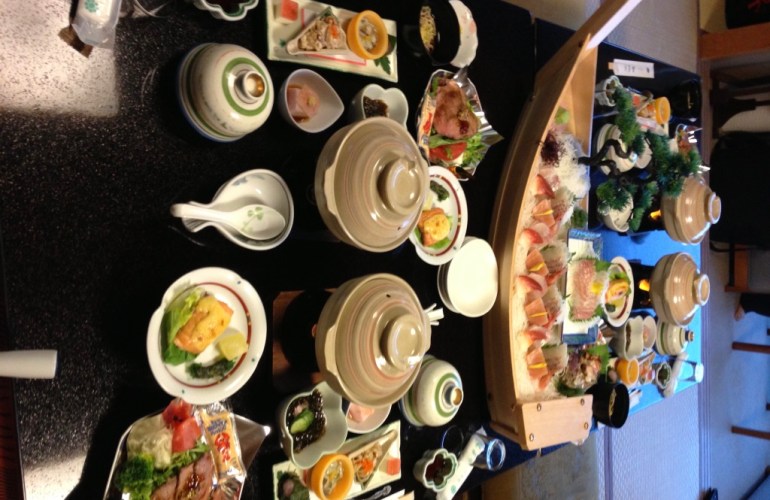
If you really want a Japanese experience, you can stay at a ryokan (Japanese-style inn) that has an onsen (hot springs). The featured image is of a dinner at a ryokan, and it was ono!
 Jet-Set Japan