Blog

Featured

Pokemon in Tokyo

This slideshow requires JavaScript.

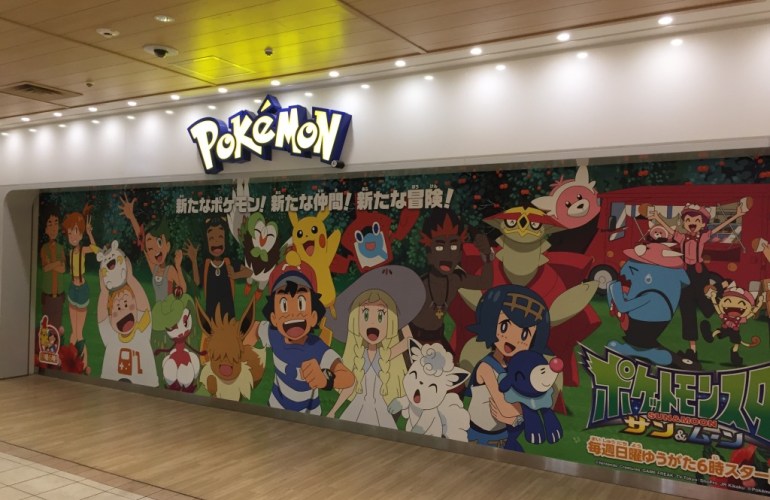
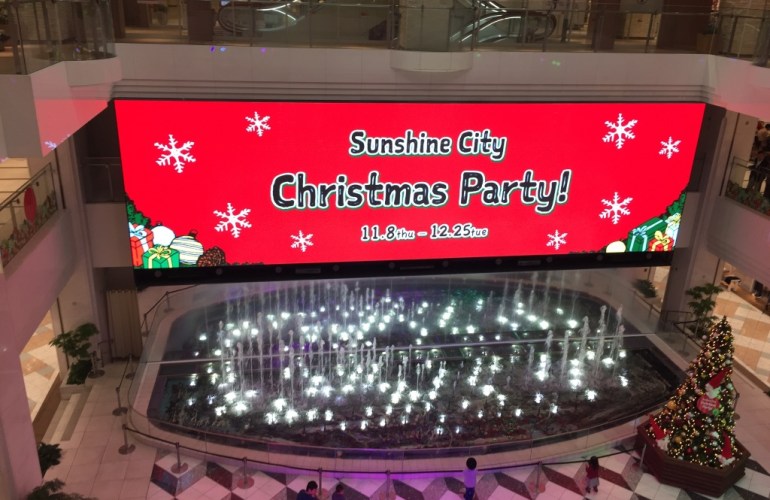
The photos above are from Pokemon Center MEGA TOKYO that is located in Sunshine City (Ikebukuro). If you or anybody you know loves Pokemon, you must visit one of the many official shops which are located across Japan.

s8gv18k%qtcjzzrtcgb+jw_thumb_355e

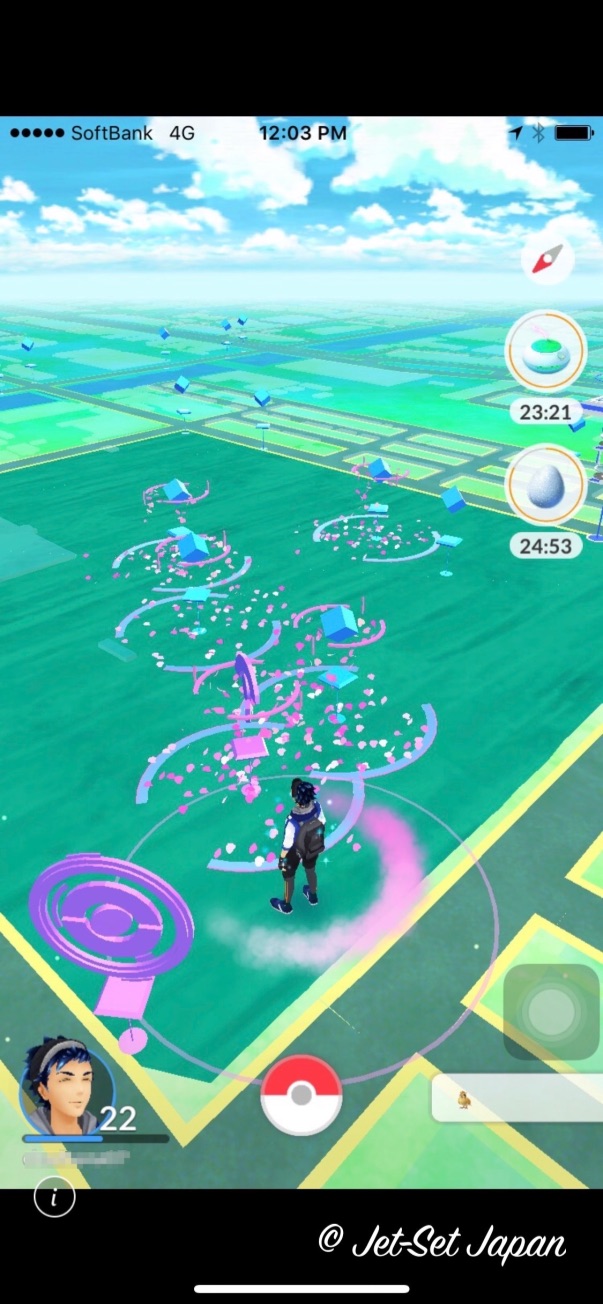
Tokyo also has tons of parks where you can play Pokemon Go. I took the screenshot above a little after Pokemon Go was released, and I was able to level up really fast by going to parks with nests and walking endlessly.

For those playing Pokemon Go, I used to play a lot at (click on the links to go to Google Maps) Kinshi Park, Odaiba (I liked Odaiba Kaihin-Koen), Yoyogi Park, and Shinjuku. Make sure you stop at a convenience store for water and some onigiri to replenish your energy, but also be careful not to use all of your smart phone’s battery or pocket wifi’s battery & data!


Featured

Ikebukuro Part 2 – Sunshine City

Following our last post which was a brief introduction of Ikebukuro, Part 2 is about Sunshine City.

This slideshow requires JavaScript.

Sunshine City is a huge area that encompasses an entire block of the Ikebukuro area, and it has shops, restaurants, an aquarium, and the Prince Hotel is located in the same block.

If you look at the Sunshine City Guide Map (in English), you’ll notice two shopping areas within Sunshine City: alpa and ALTA.

The alpa Shop Guide is very detailed with a list of recommended shops & restaurants that include descriptions.

The Play & Watch link on the Sunshine City webpage has “Recommended Courses” that show plans depending on your interests.

For example, you can go to the aquarium in the morning, have a quick lunch on one of the lower floors, do some shopping, and then have dinner while looking over the city in the Sky Restaurant Area (Japanese website).

If you’re in Ikebukuro, definitely check out Sunshine City even for just a few hours.

Featured

Ikebukuro – Part 1

For the first leg, second part of their first leg, Brandon and his friends stayed in Ikebukuro.

Ikebukuro is located kind of in the north part of Tokyo’s 23 special wards. It doesn’t have the greatest access to and from airports for first-timers with luggage, but it is quite conveniently located for travel to other parts of Tokyo: Shinjuku, Shibuya, Ginza, etc.

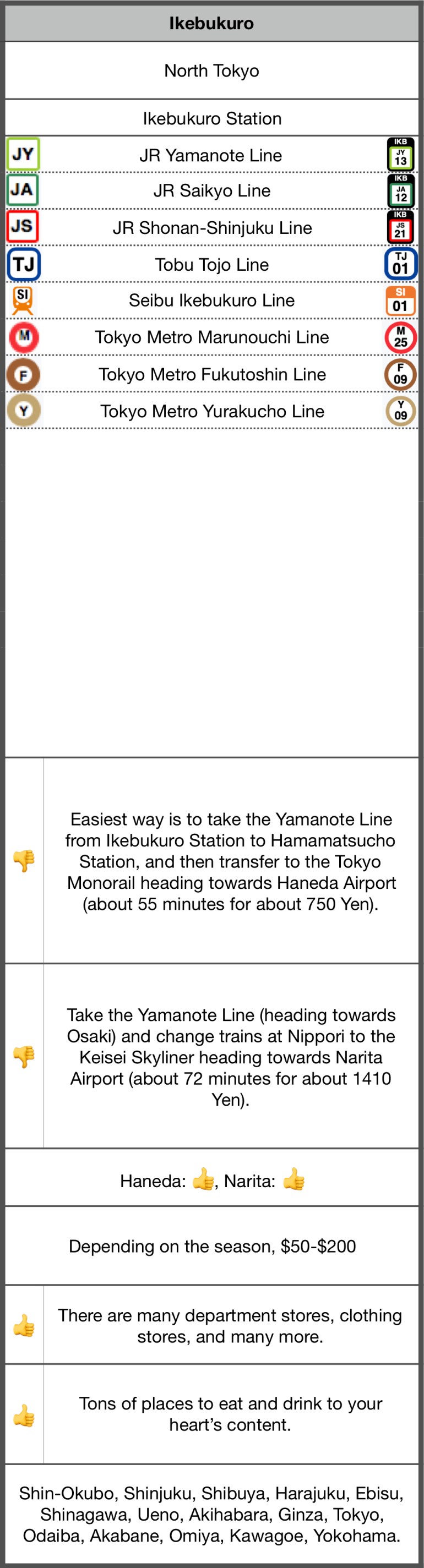
Here’s some info about Ikebukuro (based on a template we created in our Recommended Areas to Stay in Tokyo post.

ikebukuro

The thumbs up and thumbs down in the access to/from Haneda and Narita is based on whether or not a first-time traveler with luggage would have to change trains. If you are comfortable with the transportation system in Japan, changing trains once or twice might not be too much of a burden, depending on which station you are transferring at, of course.

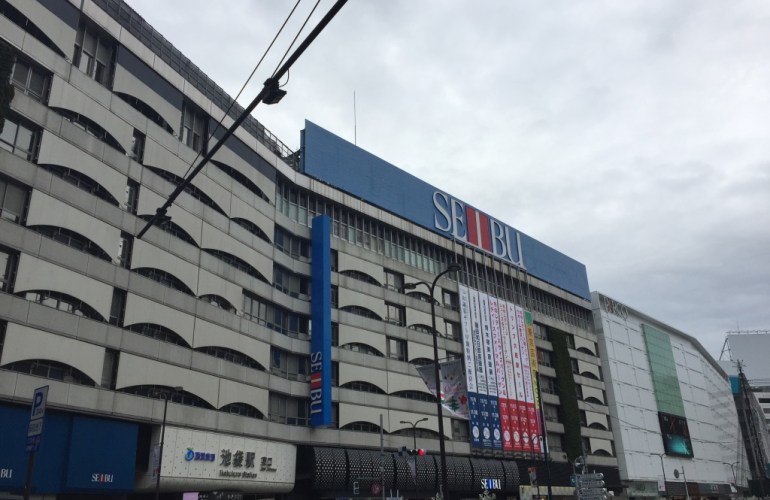
As for shopping, Seibu Department Store, Lumine Department Store, Tobu Department Store, Parco, Sunshine City are a few major places people go shopping.

For those who want to eat and drink the night away, Ikebukuro has no shortage of places, including a lot of authentic Chinese restaurants near the station’s west gate.

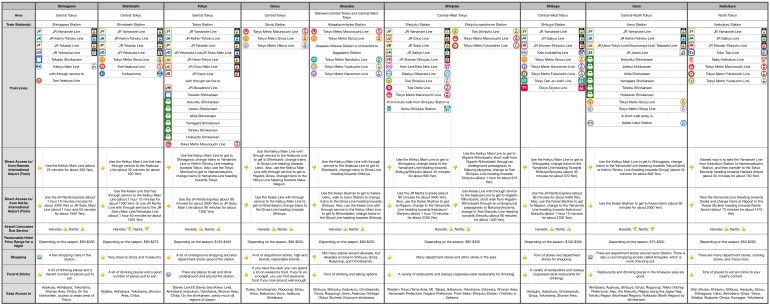
Here is an update version of the “Recommended Areas to Stay in Tokyo” table.

recommended areas to stay in tokyo

Our next post will be about Sunshine City!

Featured

Celebrating the New Year in Japan

It’s still New Year’s Eve here in Hawaii, but it’s already New Year’s Day in Japan, so…

Happy New Year!!!

Bringing in the new year is definitely the most important holiday & event in Japan, so there are various customs when doing so.

XaeoYc8HQqu7Zdyh7qk0jw_thumb_3539
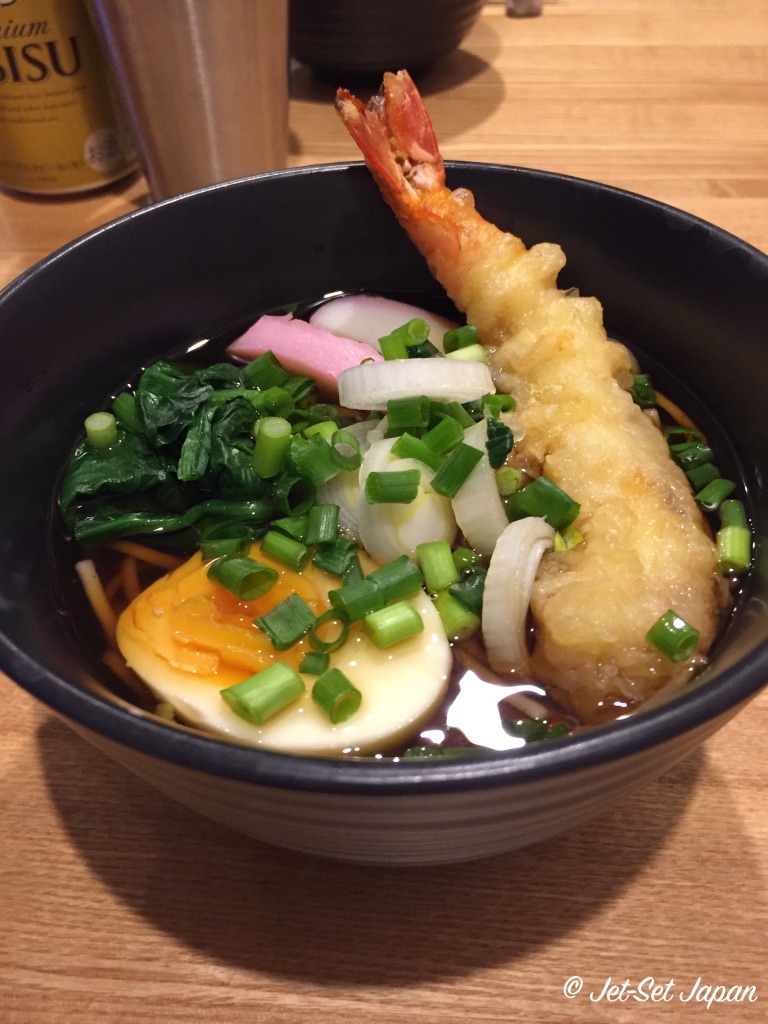
Toshi-koshi soba

For example, toshi-koshi soba (New Year’s Soba) is eaten on New Year’s Eve. Soba is long and thin, and this represents longevity for oneself and one’s family.

UNADJUSTEDNONRAW_thumb_2ccf
Red & White Song Contest from 2017

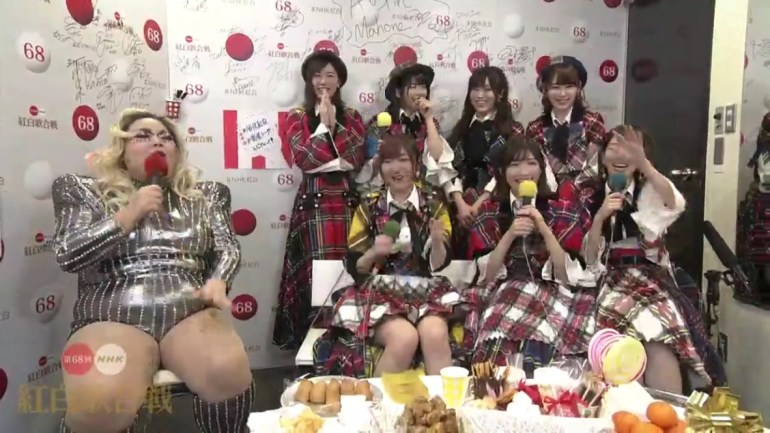
This isn’t a traditional custom, but it’s something that many people still do, despite declining viewership over the past few years ー watch the Red & White Song Contest (紅白歌合戦). In Hawaii, this is shown on New Year’s Day, but it’s shown live on New Year’s Eve until a few minutes before midnight in Japan. There’s even an app you can download to receive alerts of when your favorite artist will perform, but of course, you have to be in Japan for alerts.

This slideshow requires JavaScript.

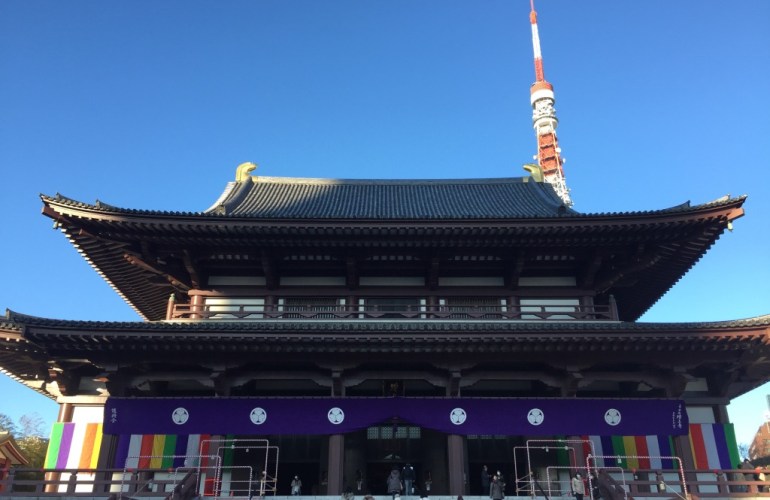
Hatsumoude is the first visit of a shrine or temple of the year. Shrines and temples have vendors selling food and drinks (alcoholic drink also) from well before midnight. When the clock strikes 12, many temples strike the bell (joya no kane) to signal the new year. The photo of Ookunitama Shrine was taken a few days after the New Year, but the photos  taken at Zojoji were taken on the morning of New Year’s Day.

This slideshow requires JavaScript.

Hatsu hi no de is the first sunrise of the year, and crowds of people gather on mountains, along the ocean, tall buildings, or anywhere there is a good view of the sunrise. As the sun starts to peak from the horizon, many people put their hands together in prayer to pray for good health and/or decide their goal for the year.

oIf8n7a%QKOuJ5sI0SoAyw_thumb_3548
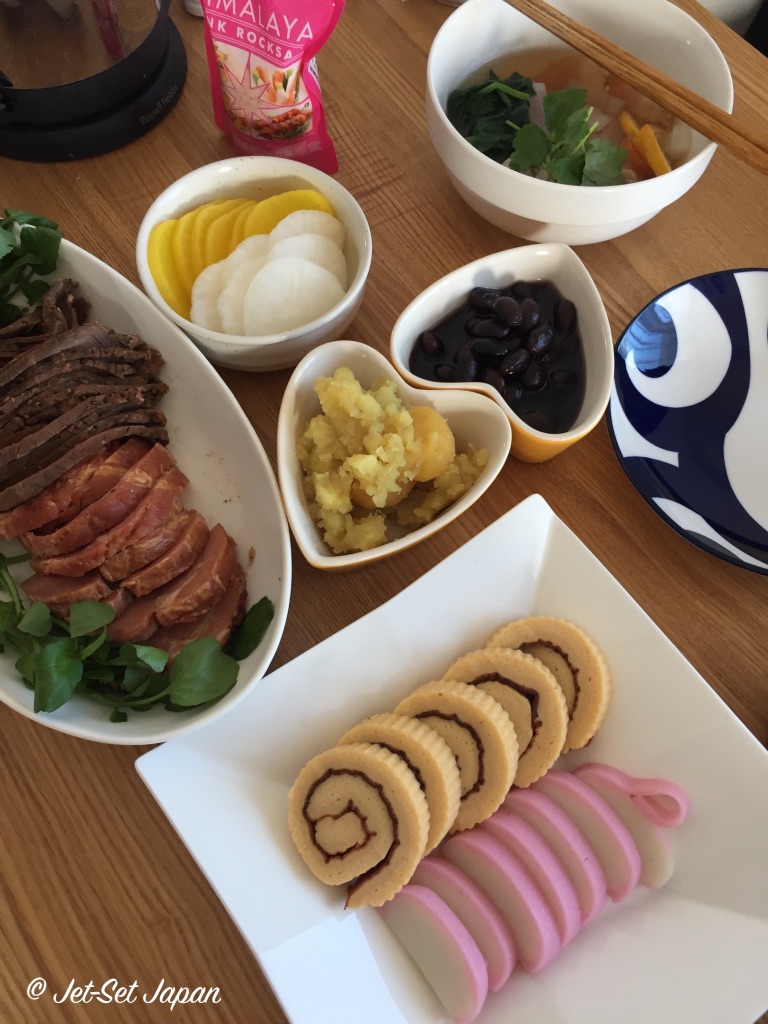
Osechi Ryori (traditional New Year’s Day Meal), Ozouni (New Year’s Day Mochi Soup) on the top, and some other side dishes

Osechi ryori is a traditional New Year’s Day meal where the various dishes and colors have a significant meaning.

Ozouni is a mochi (rice cake) soup that is eaten on New Year’s Day. Depending on the area of Japan, the ingredients, toppings, and taste will be different, but the one thing in common is the mochi. Even if the shape of the mochi used, round or square, is different throughout Japan, mochi is sticky and stretches, so it’s eaten for longevity.

These are just a few customs for New Year’s in Japan, and it’s interesting to see how some of these things have been carried on from one generation to the next here in Hawaii.

From Jet-Set Japan, we wish everybody a Happy New Year!!!

Featured

Christmas in Tokyo

This slideshow requires JavaScript.

Merry Christmas! Mele Kalikimaka! メリクリ(古いかな?)!

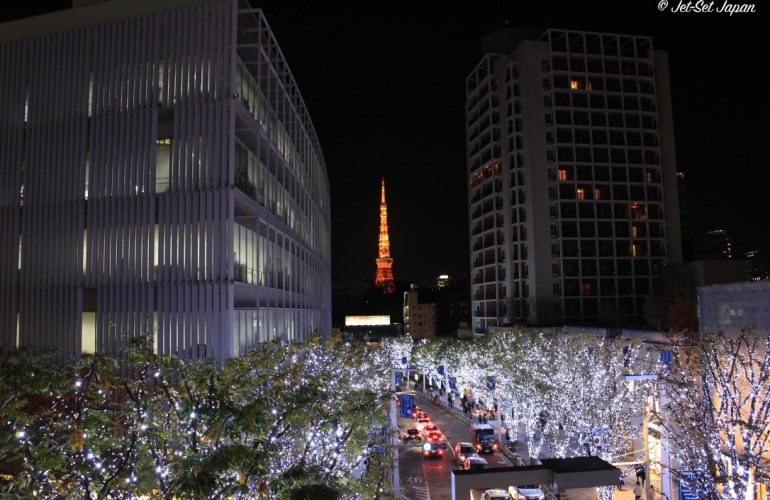
Christmas lights in Tokyo start a little after Halloween, so it considerably early, but it’s nice to enjoy the beautiful holiday scenery for almost 2 whole months.

Also, I’m sure some of you have read articles that Japanese people eat KFC for Christmas. It’s so busy that you even have to reserve your order in advance! I guess chicken is the best alternative for turkey in Japan, and there seems to be some history behind it.

In addition to KFC, Christmas cakes are in extremely high demand. Most people make an order in advance and cakes which are not sold on Christmas day are discounted.

For the most part, Christmas in Tokyo (and perhaps most of Japan), is a time for couples and families to exchange gifts and spend some time together.

More content coming soon!

Featured

(Sapporo Trip – Part 4) Mt. Moiwa

EHNSz2RmRYisgCIimjL9Fw_thumb_34f1

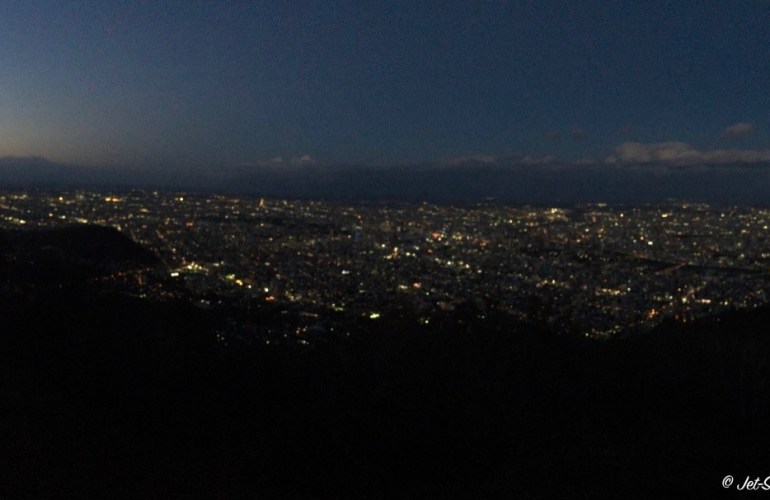
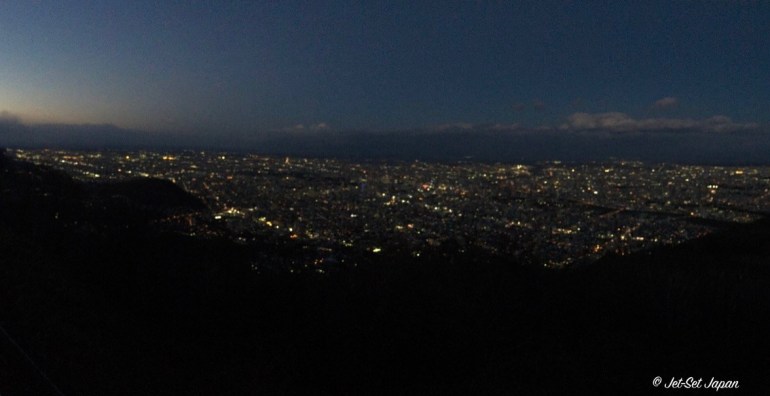
Part 4 of Brandon’s Sapporo trip is Mt. Moiwa, which is one of the best spots for viewing Sapporo’s city lights.

Mt. Moiwa is located about 45 minutes from Susukino. This is how to get there:


This slideshow requires JavaScript.

From the 4 pictures in the slideshow above:

  • DO NOT GO THIS WAY Picture: When searching on Google Maps on how to get to the Mt. Moiwa Ropeway from Susukino, it will tell you to take the Sapporo Shiden street car and get off at Denshajigyosho-mae Station. If you take this route, you will have to walk up steep stairs and then pass a temple with a cemetary, which is not very scenic.
  • The BETTER Way: Take the Sapporo Shiden street car to Ropeway Iriguchi Station. There is a free shuttle bus from the Station to the Mt. Moiwa Ropeway (5 minute ride) that departs about every 20 minutes, which is recommended if you or your somebody in your party has difficulty walking.
  • From Ropeway Iriguchi Station: It is a 5-minute walk uphill.
  • Ropeway & Minicar Tickets: First the ropeway will take you most of the way up the mountain, and then you will transfer to a minicar that will take you to the summit. It’s 1700 Yen for a roundtrip ticket for both the ropeway and minicar.

Here’s the view when you get there:


This slideshow requires JavaScript.

Some tips when going to the top of Mt. Moiwa:

  • There is an omiyage (souvenir shop), vending machines with hot and cold drinks, and a restaurant, but we recommend bringing your own snacks, o-bentos (lunch boxes), and drinks.
  • If you are visiting during cooler/colder weather, pack some warm clothes buy hokkairo (hand warmers) that can be bought in convenience stores or pharmacies.
  • The summit can get quite windy, so make sure your things don’t get blown away.
  • Be flexible with your planning because it might be cloudy on one day but sunny on another day.

Last part is:

Part 5 – COSTCO

Featured

Recommended Destinations for Your First Trip to Japan

Happy Aloha Friday!!!

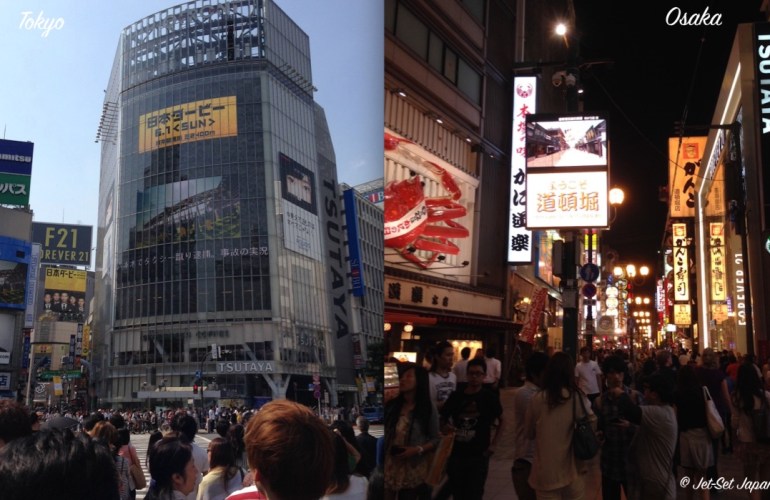
Planning your first trip to Japan, but where to go? We recommend going to Osaka and/or Tokyo. If you have only a short period for your vacation or if you are on a tight budget, we think going to Osaka is best for your first trip. If you have time and enough money, we think going to Osaka first, and then going to Tokyo is a good plan. In this post, we’re going to explain why Osaka and/or Tokyo are good destinations for your first trip to Japan.

Osaka

  • Osaka culture – In my (Chad’s) experience, locals in Osaka are really honest and genuine. Not saying that people outside of Osaka are not honest and genuine, but the people in Osaka (well, Kansai in general) are very easy to connect to because they are usually outgoing. If you go to a bar and meet a few locals, it’s easy to start a conversation. You must be thinking, “I don’t speak Japanese, so how will we communicate?” But there are people who will try to have a conversation even though they don’t have English speaking skills. It helps to speak a little Japanese, but I think making an effort is what is most important.
  • Great access to other areas of the Kansai Region – From Osaka, you can go to every prefecture in the Kansai Region (Kyoto, Hyogo, Nara, Wakayama, Mie, Shiga) without riding a shinkansen. In other words, you can Osaka as a hub to travel around the Kansai Region, which is rich in Traditional Japanese Culture. Historically, Kyoto was the capital of Japan for a little over 1000 years, and Nara was the first capital of Japan. So, if you want to get in touch with the roots of Japanese Culture and History, Kansai is the place to go.
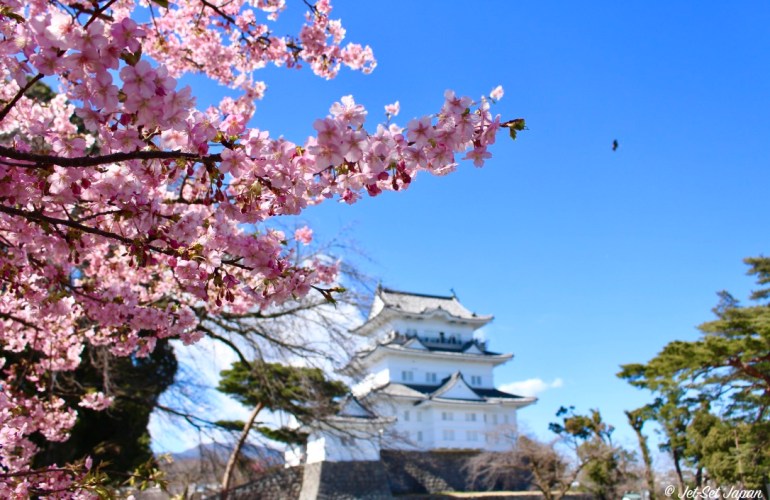
  • Traditional and modern Japan – Osaka is a fusion of both traditional and modern Japanese culture. During the spring, you can enjoy the sakura around Osaka Castle during the day, and eat good food and drink alcohol at night around Dotonbori, Namba, or Shinsaibashi (to name a few places) at night.
  • Awesome grinds (food)! – Osaka has GREAT food! Okonomiyaki, kushiyaki, takoyaki, yakiniku are just a few of the super ono local foods you can each in Osaka.

Tokyo

  • Multicultural metropolitan – Without a doubt, Tokyo is the most multicultural city in Japan because of the sheer amount diversity in the city. If you want to eat Japanese food, of course you’ll be able to find good quality food in Tokyo. If you feel like eating great pizza, there are a lot of authentic Italian restaurants with delicious pizza. If you feel like Nepalese curry, Tokyo’s got it! You get the picture, right? You can find all kinds of food in Tokyo to satisfy your craving. Another thing is Tokyo is relatively multilingual, which means you can find English signs almost everywhere.  Also, compared to other areas of Japan, a lot of people speak enough English to help you if you are lost.
  • Convenience – First and foremost, trains throughout Japan are on-time most of the time, but if you miss a train in Tokyo, the next train will come in 5 to 10 minutes. So, it’s not a big deal if you miss one train. Next, if you’re craving some ramen in the middle of the night, you’ll find a place to eat. Tokyo is the city-that-never-sleeps.

In conclusion:

1. Osaka-only plan: If you’re short on time and money, and want to see both traditional and modern Japan hit up Osaka. If you’re in Osaka for 5-7 days, you can check out more places than if you were in Tokyo for 5-7 days.

2. Tokyo-only plan: If you want to jump straight into one of the most populated cities in the world, and also want to be on full-gear for your entire trip, head over to Tokyo.

3. Osaka-to-Tokyo plan: If you have the time and money, and want to ease into Japan, head over to Osaka before Tokyo. So, you have to first fly into Kansai International Airport, and then book a flight out from either Narita or Haneda (we recommend Haneda).

4. Tokyo-to-Osaka plan: If you have time and money, and you want to jump into the excitement (and craziness) that is Tokyo before taking it (a little) easy, go to Tokyo and then Osaka.

Featured

Why Japan Is THE Travel Destination from Hawaii


1. Reasonable Overall Cost

The first thing you would have to do is buy your ticket to Japan. It goes without saying that ticket prices vary depending on which season you want to visit Japan. For example, if you want to enjoy the sakura or autumn foliage, these are the most expensive seasons to visit Japan, so you will have to pay a premium. In recent years, the average price for tickets to Japan for one person is about $1000 roundtrip.

The next thing you need to take into consideration is the currency exchange rate. Luckily, the Japanese Yen has been weaker than the U.S. dollar. If you have already planned a trip to Japan and haven’t exchanged dollars to yen, keep an eye out on the exchange rate!

Topics related to cost of transportation, food and drink, and shopping will be briefly explained below.

2. Best Public Transportation System in the World

Can you believe that train companies apologize for being 1 minute late?! That is how punctual the train system is in Japan. Not to mention busses connect areas which do not have trains, and these busses run close to their scheduled times even in traffic.

For locals in Japan, costs on public transportation is a little expensive compared to other countries in Asia, but as a visitor to Japan, you can purchase a JR Rail Pass which gives you access to almost all Shinkansen (Bullet Trains) and all local JR Lines. Using the JR Rail Pass and other available rail passes will be explained in detail in a future blog post.

3. Awesome Food and Drink

In Hawaii, our food portions are ridiculously big compared to the portions in Japan, BUT the quality of the food Japan is hard to beat. Also, you can eat quality food at a reasonable price if you look in the right places.

Fruits, vegetables, fish, meat, desserts, Japan has it all for you foodies! If you like to drink wine, whiskey, beer, Japanese sake, Japan has great choices for alcoholic beverages.

4. Fusion of Traditional Culture and Modern Culture

From temples, shrines, and castles to skyscrapers and crazy fashion trends, Japan is a mixture of traditional culture and modern culture.

5. Shopping

For those who like high-end brands, there are areas in Japan, such as Ginza in Tokyo, which have streets lined with these stores. If you are on a tight budget but want to get a bunch of omiyage for your family, friends, and colleagues, you can head over to Daiso to buy things priced at only 100 yen!

6. Nature

Japan is surrounded by the ocean, just like Hawaii, and mountains cover about 70% of the land; so, depending on the season you visit Japan, you can have different experiences outdoors.

In future blog posts, we will explain in detail various aspects of traveling in Japan. Stay tuned for more pictures and blog posts in the future! We’re still developing our content, but also check out our FacebookTwitter, and Instagram.

Mahalo!!!